If you’ve ever walked past a new retail strip mall, a bustling office park, or even a busy food truck court, you’ve probably glanced at the gray metal box mounted on the side of a building or tucked into a corner of the parking lot. That’s a commercial distribution box, and it’s way more than just a boring, utilitarian piece of equipment—it’s the unsung middleman that keeps businesses running without a hitch. As a supplier who’s spent the last 10 years building, testing, and tweaking these boxes, I’ve fielded hundreds of questions from electricians, facility managers, and small business owners who have no clue what this thing does, let alone how it actually works. Today, I’m breaking it down like we’re chatting over coffee, no stuffy jargon, no overcomplicated explanations, just the real story of how these boxes keep the lights (and the registers, ovens, HVAC, and servers) on for every place you visit. Commercial Distribution Box
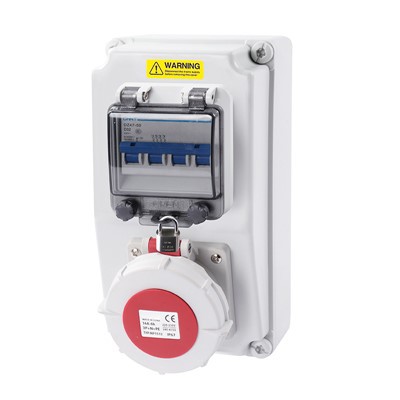
First, let’s get the basics out of the way: what even is a commercial distribution box, exactly? If you’re a homeowner, you’ve got a breaker box (that little metal panel in your garage or basement) that splits your home’s main power into individual circuits for lights, outlets, the fridge. Commercial properties are way bigger, with way more power needs—think a 20,000-square-foot grocery store with a meat slicer, freezer cases, 100+ checkout lanes, and a security system. A single home panel can’t handle that kind of load, and it’s not built for the durability or safety required for commercial spaces (which see way more foot traffic, moisture, and occasional power spikes than a residential house). That’s where our boxes come in: they’re the central hub that takes the high-voltage power from the utility company, breaks it into manageable, safe chunks, and sends it where it needs to go around the building.
Let’s start at the very beginning, the point where power first hits the box. The utility company sends power to a commercial property through thick, heavy-duty cables—usually 3-phase power, by the way, which is different from the 1-phase power your house uses. 3-phase is more efficient for large loads, right? It’s like having three separate streams of power working together, so you don’t get that annoying dimming of lights when you turn on a big appliance, like a window AC unit. When that power arrives at our distribution box, the first thing it hits is the main disconnect breaker. That’s the big red switch at the top of the box—think of it as the emergency shutoff for the entire building. If there’s a fire, or if we need to do major repairs, flipping that switch cuts all power to the box, no guessing, no fumbling with smaller breakers. That’s non-negotiable for any commercial box we sell; we build every main disconnect with a locking feature, too, so only licensed electricians can flip it, which keeps random people from accidentally shutting down a whole store.
Next up, the power flows through what’s called a main lug assembly. That’s where the main cable from the utility connects to the box internally. This part has to be super strong—commercial power can be anywhere from 120 volts (for small outlets) all the way up to 480 volts for heavy equipment like industrial ovens or large HVAC units. Our boxes are rated for different ampacities, too—we sell everything from 100 amp boxes for small pop-up shops up to 2,000 amp boxes for big box stores. No one-size-fits-all here, which is why we work with clients to figure out exactly what they need before building anything.
Now, the fun part: breaking that big, powerful 3-phase into the circuits that run around the building. This is where the distribution magic happens, and it’s way simpler than it sounds. Inside every commercial box, there’s a set of smaller circuit breakers (or fuses, though breakers are way more common now) that each control a specific circuit. Let’s use a coffee shop as an example, since those are super common clients for us. One breaker might be for the front register area, another for the espresso machine, another for the walk-in fridge, another for the interior lights, another for the security cameras. Each of these breakers is rated for a specific amount of power—15 amps, 20 amps, 50 amps, whatever the circuit needs—to make sure you can’t plug a 50-amp fryer into a 15-amp outlet and blow a whole section of the shop.
Wait, but why not just run one big cable from the utility to each piece of equipment? Oh, great question— that’s exactly why these boxes exist. Running a separate, dedicated high-voltage cable to every single appliance would be ridiculously expensive, and way harder to repair. If your espresso machine shorts out, you don’t want to have to dig up a yard to replace a main cable; you just flip the small breaker for that machine in the distribution box, and replace the circuit, and you’re done. That’s the biggest benefit for business owners: easy, targeted repairs without disrupting the whole building.
Another key feature we build into every box is the bus bar. That’s the metal strip that runs along the inside of the box, kind of like a electrical highway. The main power from the disconnect feeds into the bus bar, and all the smaller breakers clip onto the bus bar to draw power from it. It has to be made of solid copper, by the way—aluminum bus bars can corrode over time, especially in humid places like Florida or coastal areas, which is why we only use copper. That’s a detail a lot of cheaper suppliers skip, but it’s the difference between a box that lasts 10 years and one that dies in 5, costing a business thousands in downtime.
Safety is huge for commercial distribution boxes, right? You can’t have a big metal box sitting out where someone can accidentally touch a live wire. That’s why every box has a NEMA rating, which tells you how well it protects against dust, water, and accidental contact. Most of our standard boxes are NEMA 3R rated— that means they’re weatherproof, so they can sit outside on a building wall or on a pole without getting damaged by rain, snow, or sleet. If a client needs it for a more extreme environment, like a food processing plant where there’s a lot of steam and hose-downs, we build NEMA 4X rated boxes, which are completely waterproof and corrosion-resistant. We never sell a box that isn’t rated for its intended use—cutting corners on safety isn’t worth it, even if it saves a client a few bucks upfront.
Wait, let’s talk about what happens when there’s a power surge, because that’s a super common question. A lot of people wonder why their lights flicker sometimes, or why a breaker trips when something turns on. That’s the box’s protection systems working. Every commercial box we make has surge protection devices (SPDs) built in, usually near the main disconnect. If there’s a sudden spike in power—like when a lightning bolt hits the utility line, or a big appliance turns on and draws way more power than usual for a split second—the SPD diverts that extra power safely to the ground, instead of sending it through the circuits and frying a store’s computers, registers, or expensive equipment. The breakers also act as a safety net: if a circuit draws too much power (say, someone plugs a space heater and a microwave and a coffee pot into one outlet, which is way over its 15-amp limit), the breaker trips, cutting power to that circuit before the wiring gets hot enough to start a fire. We design all our breakers to trip consistently, too—no flaky breakers that either won’t trip when they should, or trip for no reason. That’s a headache no business needs.
I should also mention that these boxes aren’t one-and-done installs. A lot of people think you buy a box, put it up, and forget it, but that’s not true—especially as a business grows. We’ve had clients who started with a 400 amp box for a small restaurant, then expanded, added a drive-thru, added a patio area with string lights and a sound system, and needed a bigger box with more circuits. We make boxes that are expandable, so you can add more breakers later without having to replace the whole unit. That’s another big selling point for our clients—they don’t have to pay for a massive box upfront if they don’t need it, and they can upgrade as their business grows.
Now, let’s clear up a common myth: distribution boxes are the same as transformer boxes, right? Nope, not at all. A transformer steps power up or down—most utility transformers take the 12,000 volts from the pole and drop it to 240 volts for residential use. A commercial distribution box doesn’t change the voltage at all, it just splits it into manageable circuits. That’s a super important distinction, because mixing those two up can lead to dangerous mistakes for electricians. We always make sure our clients know the difference, too—we don’t want someone thinking their transformer is their distribution box and missing a critical safety component.
Over the years, we’ve run into a lot of issues that come from bad box design, and that’s why we test every single box before it leaves our warehouse. We do thermal testing, to make sure the bus bars and breakers don’t overheat under full load, which is a fire hazard. We drop test (carefully, of course) to make sure the metal casing doesn’t crack if it gets hit by a ladder or a falling tool. We also test the breakers to make sure they trip at the exact amp rating they’re supposed to—no faulty parts getting out the door. That’s why our boxes have a 5-year warranty, which is way longer than the industry standard—we stand behind what we build.
So, to wrap this up, let’s break down how it all works step by step, in plain terms: 1) High-voltage 3-phase power from the utility comes into the distribution box via a heavy-duty cable. 2) The main disconnect breaker lets you cut all power to the whole box, for safety during repairs. 3) The main lug assembly connects the utility cable to the internal bus bar, the central power strip inside the box. 4) Individual circuit breakers clip onto the bus bar, each controlling one specific circuit in the building. 5) The SPD diverts any power surges safely to the ground, protecting equipment. 6) Each breaker sends power along its circuit, and if that circuit draws too much power, the breaker trips to prevent fires or damage. 7) The weatherproof casing keeps all the internal parts safe from rain, snow, dust, and accidental contact.

If you’re a facility manager, an electrician, or a business owner who’s looking for a commercial distribution box—whether you’re outfitting a new space, upgrading an old one, or just replacing a broken unit—we’re here to help. We’ll walk you through amp requirements, NEMA ratings, expandability, whatever you need to make sure you get the right box for your specific use case. Don’t hesitate to reach out to our team to start planning your distribution box needs.
IP55 Power Distribution Box References:
- National Electrical Code (NEC) Article 312: Outlet, Device, and Distribution Centers
- Underwriters Laboratories (UL) Standard 67: Outlet Boxes, Pull Boxes, and Conduit Body Covers
- NEMA Standards Publication 250: Enclosures for Electrical Equipment (1000 Volts Maximum)
- Occupational Safety and Health Administration (OSHA) Standard 1910.303: General Requirements for Electrical Installations
Apeks Electric Co., Ltd.
As one of the leading commercial distribution box manufacturers and suppliers in China, we also support custom service. With abundant experience, we warmly welcome you to wholesale high quality commercial distribution box from our factory. Welcome to view our website for more information.
Address: No.2 Yuyao Rd, Yuxin, Nanhu District, Jiaxing, China
E-mail: kevin@apekselectric.com
WebSite: https://www.powerdistros.com/
