Hey everyone, thanks for stopping by my corner of the internet! I’ve been working as a fluororesin tube supplier for going on seven years now, and I can’t tell you how many times I get hit with the same question: “Should I go with rubber tubes or fluororesin tubes?” It’s such a common confusion, especially for folks who don’t work with industrial materials day in and day out. I get it—most people just want something that works, doesn’t break the bank, and doesn’t leave them stranded mid-project. But trust me, picking the wrong tube type can turn a quick fix into a huge headache, costing you time, money, and even product (or safety) down the line. Today, I’m breaking down the real differences between these two tube types, straight from the guy who’s haggled, shipped, and troubleshooted with them for years. No boring textbook jargon, just the real deal. Fluororesin Tube
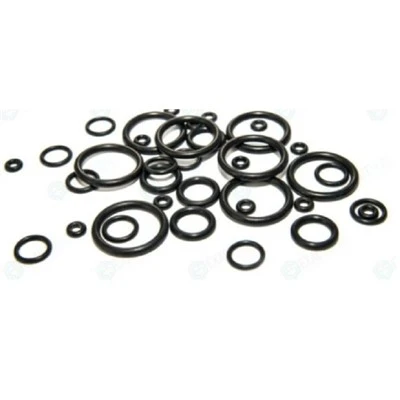
Let’s start with the basics: what even are these two? Rubber tubes are pretty straightforward—they’re made from natural or synthetic rubber, like nitrile (Buna-N), EPDM, or neoprene. Think of the hoses you use for a garden, or the tubes that carry water under your sink at home. They’re flexible, stretchy, and cheap for what they are. Fluororesin tubes (that’s the generic term for Teflon tubes, PTFE, FEP, PFA, all that good stuff) are super engineered plastics—think the stuff that coats non-stick pans, but stretched thin into tubes for industrial use. I sell a lot of these, so I’m biased, but hear me out—they’re not just “fancy plastic tubes.” They’re built for environments that would eat rubber tubes for lunch.
First up: chemical resistance. This is the biggest one, hands down. I can’t tell you how many stories I’ve heard from a customer who used rubber tubes for a chemical transfer, only to have the tube eat itself in three days. Rubber tubes hate harsh chemicals. If you’re working with acids, solvents, fuels, or even some cleaning chemicals, rubber will degrade fast. Let’s be specific: nitrile rubber works okay with oil-based stuff, but throw in a strong acid like hydrochloric acid, and it’ll start swelling, cracking, and leaking before you know it. EPDM is better for water and steam, but even it can’t handle things like methyl ethyl ketone (MEK) or concentrated bleach. Neoprene is a bit more durable, but still no match for most industrial chemicals.
Fluororesin tubes? They’re basically chemically inert. I’ve had customers use PTFE tubes (the most common fluororesin tube I sell) to carry everything from concentrated sulfuric acid to jet fuel to food-grade vinegar, and not a single time have I gotten a call about degradation. The key here is the fluorine atoms that bond tightly to the carbon backbone in the material—they don’t react with almost anything. The only things that will really mess with PTFE tubes are super specific chemicals like molten metals at extreme temps, or a handful of highly reactive fluorine gases, and even then, you’d have to be in a lab setting. That’s a game-changer for industries like pharmaceutical manufacturing, chemical processing, and semiconductor production—they can’t risk their tubes breaking mid-process, ruining batches, or hurting anyone.
Next: temperature tolerance. Again, rubber tubes are super limited here. Most standard rubber tubes max out around 200°F (93°C) before they start melting, deforming, or losing their flexibility. Even the high-heat synthetic rubbers, like silicone (yes, silicone is a rubber, technically), only go up to around 500°F (260°C) if you get the good stuff, but they get rock hard below like -60°F (-51°C). If you’re working in an industry where you need to move hot steam, for example, rubber tubes just won’t cut it—they’ll blow out.
Fluororesin tubes? They can handle way more extreme temps. PTFE tubes work from about -450°F (-268°C) all the way up to 500°F (260°C) without breaking a sweat. FEP (another fluororesin I sell) is similar, just a tiny bit lower max temp, around 400°F (204°C), but more flexible. PFA is even more heat-resistant, up to 600°F (315°C), and easier to work with for welding or fittings. I’ve had a customer use PTFE tubes to carry super cold liquid nitrogen for a lab, and they stayed flexible and leak-proof in -320°F (-196°C) temps—something no rubber tube could ever do. That makes fluororesin tubes perfect for applications like HVAC systems with hot refrigerant, industrial ovens, cryogenic storage, and even automotive exhaust parts that get really hot.
Flexibility and durability: here’s where rubber has an edge, but it’s not all it’s cracked up to be. Rubber tubes are super stretchy and bend easily, which makes them great for things like garden hoses or connecting moving parts where you need a tight, flexible fit. They’re also pretty good at absorbing vibration, so they can be used for things like car engine lines where parts are moving. But that flexibility comes with a catch: rubber tubes wear out fast. Constant bending, twisting, or exposure to UV light (from sunlight) will make rubber crack and get brittle in a matter of months, sometimes weeks if it’s not the right type. I had a landscaping customer last year who used neoprene tubes for an outdoor irrigation system, and by the end of summer, half of them were cracked and leaking because of the sun.
Fluororesin tubes are flexible too—especially FEP and PFA, which are almost as bendy as rubber—but they’re way more durable. They don’t get brittle in cold temps, they don’t crack from bending or twisting (even when you make really sharp bends for tight spaces), and they’re UV-resistant. I’ve seen PTFE tubes outside for years, no protection, and they look exactly the same as the day I sold them. The only time they’re less flexible? Really small diameter tubes, but that’s just physics—thinner plastic is stiffer. For most industrial uses, their flexibility is more than enough, and way better than rubber’s short lifespan.
Oh, and pressure resistance! Wait, a lot of people forget this one. Rubber tubes can handle pressure, but only up to a point. Standard rubber tubes are rated for like 100-150 PSI, max, and even that depends on the type. Nitrile can handle higher oil pressure, but still not more than 300 PSI for heavy-duty stuff. If you need to move high-pressure fluids, rubber tubes will bulge, leak, or burst.
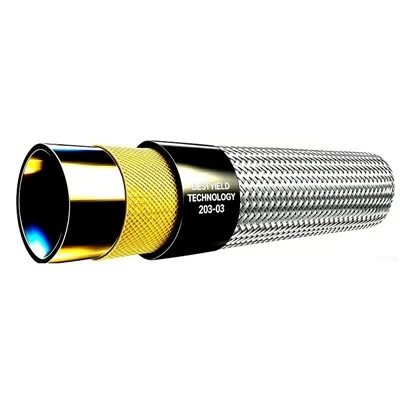
Fluororesin tubes, though? They have way higher pressure ratings. Most PTFE tubes I sell are rated for up to 400 PSI, and the reinforced ones (with a stainless steel braid) go way higher—like 2,000+ PSI for industrial use. That’s huge for applications like hydraulic lines, high-pressure cleaning, or pneumatic systems where you’re pushing a lot of air or fluid through the tube. I had a customer in the oil and gas industry last year who needed tubes for a high-pressure fuel line, and rubber tubes kept bursting every month. We switched him to reinforced PFA tubes, and he hasn’t had a single issue in over a year. Win for everyone.
Wait, what about cost? I know this is a big one for a lot of people. Rubber tubes are way cheaper upfront. A 10-foot section of ½-inch rubber tube might cost you $5, while the same size fluororesin tube is around $20. That’s a big difference if you’re just buying one small section. But here’s the thing: that upfront cost is a trap. Because rubber tubes wear out fast, you’re buying them over and over. That same landscaping customer I mentioned? He went through 5 sets of rubber tubes in a year, costing him $50 total. A set of fluororesin tubes that would have done the same job? $20, and he only buys it once. Plus, if you’re using them for industrial applications where downtime costs money, that’s a whole other factor. If your rubber tube bursts and shuts down your production line for a day, that’s way more than the difference between rubber and fluororesin tubes. Fluororesin tubes last 5-10 times longer than rubber tubes in most environments, so the total cost over time is way lower.
And there’s one more thing I need to mention: purity, especially for food, beverage, and pharmaceutical applications. Rubber tubes aren’t food-safe or drug-safe. They can leach chemicals into whatever you’re carrying, especially when exposed to heat or pressure. That’s a huge no-no for industries like brewing, where you can’t have chemicals from the tube getting into the beer. Fluororesin tubes are FDA-approved for food and pharmaceutical use—they’re non-toxic, non-leaching, and meet all the strict safety standards. That’s why almost every major pharma company uses fluororesin tubes for their fluid transfer systems.
Now, I’m not here to say rubber tubes are useless. They’re perfect for certain jobs. If you need a cheap, flexible tube for a small, low-pressure, non-harsh environment—like a garden hose, a simple aquarium line, or a temporary water connection—rubber is fine. It gets the job done, it’s cheap, and you can pick it up at any hardware store. But if you’re working with chemicals, extreme temps, high pressure, outdoor use, or need long-term durability? Fluororesin tubes are the way to go.
I’ve seen too many people make the mistake of going with rubber to save a buck, only to regret it when their line breaks, their product gets ruined, or they have to replace the tube every few months. As a fluororesin tube supplier, I know my stuff, and I’d rather help you pick the right tube first time than sell you the wrong one and have you come back mad.
If you’re not sure which tube is right for your project—whether you need it for chemical processing, a lab, automotive, food and beverage, or whatever—hit me up to chat. I’ll walk you through the different types (PTFE, FEP, PFA, all the options I sell) and help you pick the perfect fit for your needs, no pressure, no salesy nonsense. Just honest advice from someone who’s been in this game for a long time.
Refrigerant Hose References
- Brandrup, J., Immergut, E.H., & Grulke, E.A. (1999). Polymer Handbook (4th ed.). John Wiley & Sons.
- Society of Automotive Engineers (SAE). (2021). Standard J200: Performance of Rubber Hoses for Automotive Applications.
- U.S. Food and Drug Administration (FDA). (2022). Food Contact Materials: Polytetrafluoroethylene (PTFE) and Fluorinated Ethylene Propylene (FEP).
- DuPont. (2020). Teflon Fluoropolymers: Properties and Application Guide.
BESTYIELD Technology (Huizhou) Co., Ltd.
BESTYIELD Technology (Huizhou) Co., Ltd. is one of the most professional fluororesin tube manufacturers and suppliers in China, featured by quality products and good price. Please rest assured to buy durable fluororesin tube made in China here and get quotation from our factory. Customized orders are welcome.
Address: Yinshan Industrial Zone, Liangjing Town, Huiyang District, Huizhou City, Guangdong Province
E-mail: rick@bestyield.net
WebSite: https://www.bestyield.org/
