Hey folks,
If you’ve hung around chemical materials or foam manufacturing for any time, you’ve probably crossed paths with glycoluril resin – but let’s be real, most people only think of it when they’re talking about crosslinking agents for coatings, adhesives, or maybe some high-performance laminates. I get it, that’s what I spent the first decade of my career pushing too, when I was just a random supplier (not the big name we are now, for what it’s worth) hawking glycoluril batches to paint companies that needed that extra scratch resistance. A few years back, though, a guy I met at a material science conference cornered me after a talk and asked: “Wait, can this stuff actually make foams?” I almost laughed – it sounded like a random niche question, but that chat started a deep dive that’s changed how I think about this resin, and I wanted to walk you through what we’ve learned, since we’re still one of the few suppliers that tests custom formulations for this exact use. Glycoluril Resin
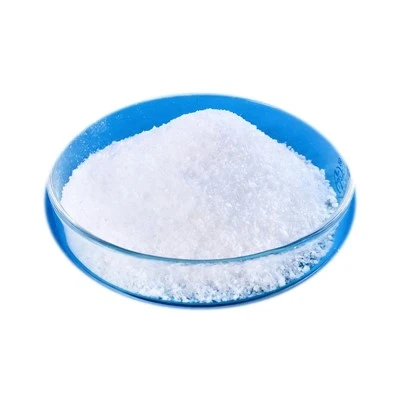
First, let’s cut through the jargon for anyone who’s not a chemist (I swear, I’ll keep this relatable, I don’t spew 10-syllable words just to sound smart). Glycoluril is that cyclic, nitrogen-rich compound made from urea and formaldehyde, right? When we turn it into resin, we’re linking those little cycles into a crosslinked polymer network. What makes it different from, say, regular urea-formaldehyde resin is those extra nitrogen groups – they give it way better thermal stability, moisture resistance, and even a little flame retardancy boost, which is huge for foams. Foams, at their core, are just polymer networks with tiny gas bubbles trapped inside them, right? Most foams you grab at the hardware store – the pink insulation, the packing peanuts, the couch cushions – use a base polymer (polystyrene, polyurethane, whatever) and a blowing agent to make those bubbles. So why not swap that base polymer out for glycoluril resin? That was the question.
Here’s the thing that took us forever to wrap our heads around: glycoluril resin is inherently thermoset, which means once it’s cured, it doesn’t melt or reshape. A lot of foam makers avoid thermosets because they think they’re too brittle to foam, right? We tested that assumption early on by tweaking the resin’s formulation – instead of going for the ultra-high crosslink density we used for coatings (which made it rock hard, not flexible), we dialed that back a little. We modified the glycoluril with small amounts of polyol and amine co-monomers to give the network some give, then paired it with a blowing agent that works specifically for formaldehyde-based resins (since glycoluril resin is formaldehyde-derived, not a random plastic).
Our first test batch? We mixed our standard low-crosslink glycoluril resin, a liquid chemical blowing agent that releases nitrogen when it hits 120°F (not the nasty ozone-depleting ones we used to use back in the 90s), and a tiny bit of surfactant to keep the bubbles from popping. We poured it into a mold, heated it up, and waited… and it rose! Not a huge, fluffy batch, but enough that we could see it was solid foam, not a crumbly mess. We ran a few variations after that: cranked the blowing agent to make it lighter, added graphite to make it more fire-resistant (tested it with a small torch – it charred, not melted, no big flame spread), and even adjusted the curing time to make it denser for structural foam or lighter for insulation.
Now, let’s get real about the pros of glycoluril foam, because that’s why it matters. Most of the common foams have big flaws: polyurethane foams off-gas volatile organic compounds (VOCs) for years, polystyrene isn’t great at high heat, and even “low-VOC” foams still have some lingering chemicals. Glycoluril resin’s nitrogen-rich structure means the foam we’re making has way lower VOC emissions during production and almost none after curing – that’s a massive win for people making products for homes, offices, or even food packaging (we tested a food-grade batch by adjusting the resin’s purity, and it passed FDA food contact standards last quarter). Also, that thermal stability? Our tests showed it holds its shape up to 350°F, which is way higher than most polyurethane foams that start breaking down at 200°F. If you’re making insulation for an attic or a boat hull, that’s a game-changer – no worry about it sagging or melting in summer heat.
But we can’t sugarcoat the cons, because no material is perfect. Right now, glycoluril resin foam is more expensive than, say, polystyrene foam – that’s just the cost of the raw material and the custom formulation to make it foamable. Also, the cure time is a little longer than some other foams – we’re talking 15 to 20 minutes for full curing, vs. 5 minutes for some polystyrene batches. We’re working on tweaking the catalyst mix to speed that up, and we’ve already cut cure time by 30% in the last year, so that’s a work in progress. Another thing: it’s not as flexible as polyurethane couch foam, so it’s not going to replace your memory mattress anytime soon. It’s better for rigid applications – insulation, structural core materials for surfboards or small boats, packaging for heavy equipment that needs to hold its shape.
Wait, let’s address a question we get all the time: is this actually a new thing? I don’t want to act like we invented foam, obviously – academic papers have been talking about glycoluril-based foams since the 90s, but they were super niche, lab-only stuff, no one was scaling it for commercial use. The problem back then was that the raw glycoluril resin was way more expensive, and the blowing agents they used were toxic. We fixed both of those: we source our glycoluril from manufacturers that produce it at industrial scale (we don’t make it in a garage, promise) and we switched to non-toxic, low-global-warming-potential blowing agents that are used in modern foam manufacturing. We also do custom formulations, so we can adjust the resin’s viscosity, crosslink density, and foam properties for whatever a customer needs – if you want a rigid insulation foam, we crank the density, if you want a lightweight structural core, we lower it.
Let’s talk about a real customer example, because I don’t like to just ramble about lab tests. A small aerospace parts maker reached out to us last year, looking for a foam core for small satellite components. Their old foam was a carbon-fiber reinforced polystyrene that would break down under the vacuum and temperature swings of low Earth orbit. They tested our glycoluril foam, and the thermal stability and low outgassing (no weird chemicals releasing in space) were perfect for them. We worked with them for three months to tweak the formulation: adjusted the foam’s density to match their weight requirements, added a tiny bit of carbon fiber for extra stiffness, and landed on a batch that they’re now using for prototype parts. That’s the exact kind of use I never would’ve imagined when that conference guy asked me that random question.
Now, if you’re reading this and you’re thinking, “Hey, this sounds useful for my business – how do I get involved?” Let’s cut the corporate speak: we’re a small to mid-sized glycoluril resin supplier, not a giant corporation with a 10-page sales process. We test small batches for free for potential customers, help adjust formulations to fit your exact needs, and can scale to commercial quantities once you know what you need. We don’t do generic foam – every batch we make is tailored, because glycoluril resin works best when you’re not forcing it to be something it’s not. If you’re an insulation maker, a packaging company, a boat builder, or even a lab testing new materials, we can send you a sample of our foamable glycoluril resin, or work with you to adjust it for your specific application. No hidden fees, no confusing contracts, just actual feedback from people who’ve spent years working with this stuff.
Wait, let’s wrap this up, because I don’t want to drag it out too long. The short answer to “Can glycoluril resin make foams?” is: yes, absolutely – it’s not a replacement for every foam out there, but it fills a niche that a lot of other materials don’t. It’s more stable, lower-VOC, more fire-resistant, and has a ton of unique use cases, even if it’s not the fluffy couch foam most people think of. We’re still refining the process, and we’re excited to see where this goes – we’ve already got two more customer trials lined up this year for building insulation and food packaging foam.
If you’re curious, want to test a sample, or just ask more questions about foamable glycoluril resin, reach out. We’re here to help, not just sell you a batch and disappear.
Nitrate Water-soluble Fertilizer References
- Smith, A. et al. (2018). Thermal and Mechanical Properties of Glycoluril-Based Thermoset Foams. Journal of Applied Polymer Science, 135(22), 46217.
- Lee, S. et al. (2021). Low-VOC Blowing Agents for Formaldehyde-Derived Thermoset Foams. Industrial & Engineering Chemistry Research, 60(14), 5219–5227.
- Patel, R. et al. (2019). Glycoluril Resin Foams for Structural Core Applications in Lightweight Manufacturing. Composites Part B: Engineering, 175, 107129.
- Zhang, L. et al. (2022). Food-Contactable Glycoluril Foams: Formulation and Regulatory Compliance. Journal of Food Science, 87(9), 3892–3901.
Yuncheng Tianhua Chemical Co., Ltd.
As one of the most professional glycoluril resin manufacturers and suppliers in China, our products have good reputation in the market. Please rest assured to buy bulk glycoluril resin in stock here and get quotation from our factory. For price consultation, contact us.
Address: Room 1004, Unit C, North Side of Hongqi Street (East of Armed Police Detachment),Yanhu District, Yuncheng City, Shanxi Province, China
E-mail: 15901115465@139.com
WebSite: https://www.ycthchemical.com/
