If you’ve ever walked into a pharmacy and grabbed a blister-packed cold medicine, or picked up a blister-wrapped toy for a kid, you’ve held a product that only exists because of blister packaging machines. For the past eight years, I’ve run a small blister packaging machine supply team—we don’t just sell machines, though; our clients come back because of the after-sales support that actually shows up when they need it. I get dozens of messages a week from new packaging business owners asking the same thing: “What after-sales services do I actually get when I buy a blister packaging machine?” It’s a fair question. A blister machine isn’t a toaster—if it breaks down mid-shift, that’s thousands in lost product, missed orders, and frustrated staff. No two machines are the same, so one-size-fits-all support doesn’t work. Let’s break down the after-sales services we actually offer, the ones that make a difference, and why they matter more than the machine itself half the time. Blister Packaging Machine
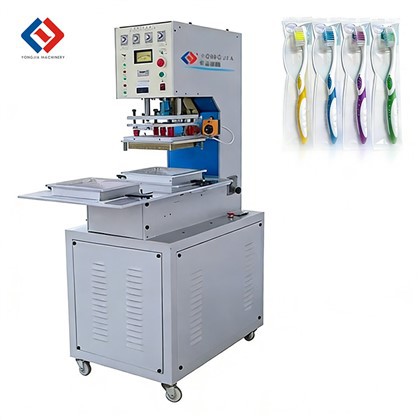
First off, when a client takes delivery of a new blister packaging machine, we don’t just leave a manual in a box and ghost them. Our first core after-sales service is on-site installation and start-up training, tailored to their specific line. Last year, we had a small pharmaceutical client in rural Ohio take delivery of a semi-automatic blister machine for their over-the-counter allergy pills. Their lead tech, a guy named Tom who’d been in manufacturing for 15 years, thought he could “figure it out” on his own. He tried to run a test batch the night the machine arrived, and he’d adjusted the heat seal temperature wrong—ended up wasting 500 blisters, tripped a circuit, and fried the small circuit board on the seal head. That would’ve been a $1,200 service call and a week of downtime, easy. But because our after-sales team schedules on-site start-up before the machine even ships, we sent two techs out a week early to walk Tom and his crew through every part: how to align the blister film, set the correct seal pressure for their PVC/aluminum foil, and test the machine for 200 consecutive blisters before they even touched their own product. Now, if Tom has a small issue, he texts our after-sales line and usually figures it out in 10 minutes. That’s the kind of after-sales service that prevents problems before they start. It’s not just training on buttons—it’s training on how their machine works, so they don’t break it trying to fix it.
Next up: scheduled preventive maintenance and remote monitoring. A lot of people think after-sales is only for fixing things after they break, but the best support is stopping breakdowns before they happen. We offer two levels of preventive maintenance: quarterly on-site checks for high-volume production lines (like the ones at big candy or pharma factories) and monthly remote checks for smaller shops that run their machines a few days a week. For our high-volume clients, our techs show up with a checklist of every part that wears out: the die-cutting blades, the heat seal rollers, the motor bearings. Last quarter, a snack client in Texas had a 24/7 blister line for their chocolate-covered pretzels. Our tech noticed that one of their seal rollers had a tiny crack that would’ve caused blisters to pop open by the end of the month—caught it, replaced it during a scheduled shift break, and saved them from an estimated $18,000 in lost product that would’ve gone bad if the seal failed. For smaller clients that can’t afford a full-time maintenance guy, we use remote monitoring: our machines have a small, unobtrusive module that tracks run time, temperature, and pressure, and sends an alert to our after-sales team if something’s off. A giftware client in Michigan texted us at 8 a.m. one day saying their blister machine was running slow. We checked the remote data and saw the feed rollers were slipping because of a buildup of plastic dust—told them to turn off the machine, wipe the rollers with isopropyl alcohol, and they were back up and running in 15 minutes. No service call, no downtime, just a quick tip. That’s the kind of after-sales support that feels like having a dedicated tech on call 24/7, without the high cost.
Then there’s the spare parts service, which is make-or-break for any blister machine owner. Let’s be real: parts wear out. A die-cut blade will dull, a seal heater will burn out, a sensor will get dirty. If you have to wait three days for a new part, that’s three days of lost production. We stock 98% of all common spare parts right here in our warehouse, and we offer two shipping options: 24-hour delivery for emergency parts (we’ve had a client in Chicago order a new circuit board at 2 p.m. and have it by 6 a.m. the next day) and standard 48-hour delivery for non-urgent parts. But we don’t just sell parts—we send a free video with every new part showing exactly how to install it. A lot of our clients are small, so they don’t have a team of master techs. Last month, a boutique cosmetic brand in New York City had a client order a custom die-cut blade for their small blister machine. They were panicking because they had a launch date in a week, and the blade they had was dull. We shipped the blade overnight, and included a five-minute video showing how to remove the old blade, align the new one, and test it—no tools beyond a standard Allen wrench, which they had in their office. They had the new blade installed by the end of the day, no extra cost for installation help, no downtime. That’s the kind of after-sales service that turns a stressful problem into a non-issue. We also keep a list of hard-to-find parts for older blister machines too—many clients have 10-year-old machines that work perfectly for their line, and they don’t want to replace them just because a rare part is hard to get. We source those parts directly from the original manufacturers, so even if your machine is vintage, we can get you the parts you need.
One of the after-sales services that our clients talk about the most is the troubleshooting hotline. It’s not a generic line with a menu that makes you press 1 for this, 2 for that. It’s a direct line to the after-sales team—three techs and two support reps—who actually know blister machines, not just generic manufacturing equipment. The line is open 24/7, 365 days a year, including holidays. Last Christmas Eve, a pharmaceutical client in Pennsylvania had a machine that wasn’t sealing their blisters properly. Their tech tried adjusting the heat, pressure, and speed, but nothing worked. They called our hotline at 9 p.m. our time (which was 6 p.m. theirs) and got one of our senior techs, Dave, who’s been working on blister machines for 20 years. Dave walked him through step by step: first, check the temperature sensor to make sure it’s calibrated, then check the film tension, then reset the machine’s control panel. Turns out the tension on the film was set too loose, so it wasn’t feeding evenly. They fixed it in 20 minutes, and the client was able to run their test batches before the new year. That’s not the kind of support you get from a big box supplier that outsources their after-sales to a call center in a different time zone. Our team actually cares, because we’ve built our business on repeat clients. We know that if a client has a good experience when their machine breaks, they’ll come back when they need a new machine, or refer a friend.
We also offer customized maintenance plans for clients who need more tailored support. For example, a large confectionery client that runs three blister machines 20 hours a day opted for a yearly full-service plan: two on-site checks a month, unlimited spare parts at a 15% discount, priority scheduling for service calls, and a dedicated account manager to handle all their needs. This plan costs them less than they’d pay for a full-time in-house maintenance tech, and they get the expertise of our entire team. One of our smallest clients, a local craft soap maker, opted for a basic maintenance plan that includes one on-site check a quarter, and access to our troubleshooting hotline. For them, it’s affordable, and they don’t have to worry about spending hours trying to fix a machine that they only use a few times a week. It’s important to us that after-sales services aren’t one-size-fits-all—each client’s needs are different, so we build a plan that fits their production volume, budget, and level of in-house expertise.
A lot of people ask, “Why bother with all this after-sales stuff? Why not just sell the machine and move on?” Let me tell you a story about a client we had three years ago. A small toy manufacturer in Florida bought a used blister machine from a big online supplier. The machine arrived broken, the manual was in a different language, and when they tried to call for support, they got a message that the company had gone out of business. They reached out to us, and we ended up repairing their machine for half the cost of a new one, plus giving them a year of free after-sales support. Now, they’re one of our biggest clients, and they refer three new clients to us every quarter. That’s the power of good after-sales services: it turns someone who could’ve had a bad experience into a loyal customer. A blister packaging machine is a big investment—most small to medium-sized businesses spend anywhere from $10,000 to $100,000 on a new machine. When you’re spending that kind of money, you don’t just want a piece of equipment; you want a partner who’s going to be there when something goes wrong, who’ll help you keep your machine running smoothly, and who’ll answer your questions when you’re not sure how to use it.

So if you’re in the market for a blister packaging machine, don’t just look at the price of the machine. Look at the after-sales services. Can you get on-site installation and training? Is there a 24/7 troubleshooting hotline stocked with people who actually know blister machines? Do they stock spare parts and offer fast shipping? Do they offer customized maintenance plans that fit your needs? These are the things that will make or break your experience with a blister packaging machine supplier. At our team, we don’t just sell machines—we build long-term relationships with our clients, because we know that when your machine is running, your business is running. If you have questions about our after-sales services, or if you’re ready to talk about what kind of blister packaging machine would work best for your production needs, feel free to reach out to our team to discuss your requirements. We’re here to help you every step of the way, from initial consultation to long-term support.
Synchronous Fusing HF Welding Machines References
Blister Packaging Machinery: Operation, Maintenance, and Troubleshooting. Industrial Press Inc.
Smith, J. (2021). The Role of After-Sales Support in Packaging Machinery Customer Retention. Journal of Packaging Technology and Science.
Williams, L. (2022). Preventive Maintenance Protocols for High-Volume Blister Packaging Lines. Packaging Industry Journal.
Dongguan Yongjia Machinery Equipment Co., Ltd.
We are one of the most reliable blister packaging machine manufacturers and suppliers in China, specialized in providing high quality customized service. Please feel free to wholesale advanced blister packaging machine at low price from our factory. For quotation, contact us now.
Address: No. 240, Chashan South Road, Chashan Town, Dongguan City, Guangdong Province, China
E-mail: info@yjwelding.com
WebSite: https://www.yjhighfrequencymachine.com/
