If you’ve ever stood in front of a hardware shelf, squinting at a pile of bolts and screws that look almost identical—same diameter, same thread pattern, even the same shiny finish—you’ve probably wondered the same question I hear every single day from contractors, DIYers, and engineers alike: “What’s the maximum shear strength of these things, anyway?” As someone who’s spent the last 12 years running a bolts and screws supply business, I’ll tell you right now it’s not a one-size-fits-all number. I’ve seen a $1 stainless steel screw snap mid-deck build because someone tried to use it for a load it was never meant for, and I’ve watched a Grade 8 bolt hold up a 10,000-pound trailer hitch without so much as a squeak. Let’s break this down the way I explain it to every customer who walks through my door (or calls at 7 a.m. with a last-minute job panic). Bolts and Screws
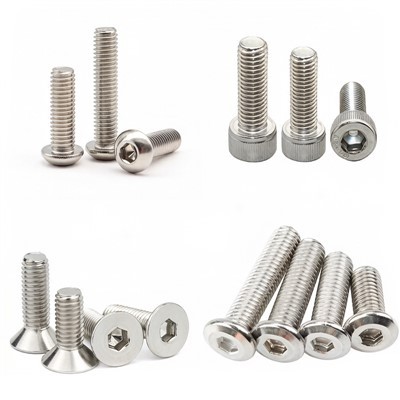
First, let’s get the basics straight because shear strength is way different than the tensile strength most people mix it up with. Tensile strength is what holds a bolt or screw when you pull it straight apart—think of stretching a rubber band until it breaks. Shear strength is the force that slides two parts against each other, like if you clamp a bolt through two pieces of wood and push one piece left and the other right, or if you mount a shelf bracket and the bracket pulls the screw sideways. That sideways force is where shear happens, and it’s the most common reason fasteners fail in the real world, not pulling straight apart.
Now, the maximum shear strength of a bolt or screw isn’t just printed on a box somewhere—it depends on three big factors: the material it’s made from, its grade (or hardness rating), and whether it’s being used in single shear or double shear. I can’t tell you how many times I’ve had a customer order the right grade bolt for single shear, then use it for a double shear application without realizing they just cut their strength in half. Let’s go through each of these, since they’re the difference between a job that lasts 20 years and a call back at 2 a.m. because something fell apart.
Material is the first and biggest variable. Most of the fasteners we supply fall into four main material categories: carbon steel, alloy steel, stainless steel, and brass. Each has a completely different shear strength, and I always make sure to show customers the data sheets for each, not just tell them numbers. Carbon steel is the workhorse of fasteners—cheap, strong, and versatile. A common 1/2-inch diameter Grade 5 carbon steel bolt, for example, has a maximum shear strength of around 75,000 psi (pounds per square inch) when used in single shear. That means every square inch of its cross-section can handle 75,000 pounds of sliding force before it snaps. Grade 8 carbon steel is even stronger—its single shear maximum is about 120,000 psi, which is why it’s the go-to for heavy machinery, trailer hitches, and structural steel.
Alloy steel is a step above carbon steel, made by adding elements like chromium, nickel, or molybdenum to make it harder and more resistant to wear. We use alloy steel bolts for applications where corrosion is a risk but strength is non-negotiable—like off-road vehicle parts or bridge components. A 5/8-inch Grade 9 alloy steel bolt has a single shear maximum of roughly 150,000 psi, which is 25% stronger than Grade 8. I always warn customers, though, that alloy steel is more brittle, so it can snap suddenly if it’s under extreme cyclic force (like a trailer bouncing down a gravel road) without warning.
Stainless steel is the other big one, divided into two main types: 304 and 316. 304 stainless is the most common, used for kitchen appliances, outdoor decking, and general construction. Its single shear maximum is about 48,000 psi for a 1/2-inch bolt—softer and less strong than carbon steel, but resistant to rust, which makes it worth the tradeoff for outdoor use. 316 stainless is even better for saltwater or harsh chemical environments, with a single shear strength around 55,000 psi. I had a landscaper customer last year who tried to use 304 screws to mount a dock in the Gulf of Mexico—within a year, half the screws sheared right off because the saltwater ate at the weaker material, and I had to replace them with 316. Lesson learned: material isn’t just about strength, it’s about where you’re using it.
Then there’s brass, which we mostly supply for decorative applications or low-stress uses like door hinges or jewelry displays. Its shear strength is only around 25,000 psi, so I never recommend it for anything that carries actual load. I’ve had people come in asking for brass bolts for a fence—bad idea, I tell them, it’ll bend before it holds the gate up. Stick to brass for looks, not strength.
Next, the grade of the fastener is tied directly to that material’s hardness. Fastener grades are standardized (ASTM, SAE, ISO, depending on the country) and marked on the head of the bolt or screw, so you don’t have to guess. The marks are little lines or numbers—for example, a Grade 5 bolt has three radial lines on the head, Grade 8 has six, Grade 9 has nine. For screws, it’s usually T-head marks or a number stamped on the shank. The grade tells you the tensile strength, and shear strength is almost always a fraction of tensile strength—usually about 60% to 75% of the tensile rating. That’s a key rule of thumb I’ve used for years: if you know the tensile strength, multiply it by 0.65, and you’ll get a close estimate of the maximum shear strength. That’s why Grade 5 bolts (tensile 120,000 psi) have a shear of ~78,000 psi, which matches the number I told you earlier. It’s not exact, but it’s a great starting point when you don’t have a data sheet handy.
Now, the part that trips up everyone: single shear vs. double shear. Single shear is when the bolt only has one plane of sliding force—like a bolt holding two pieces of wood together, so the shear happens across one cross-section of the bolt. Double shear is when there are two planes of sliding force—think of a bolt that goes through three pieces: the middle piece pushes left, the two outer pieces push right, so the shear is across two cross-sections of the bolt. That means a double shear bolt is almost twice as strong as the same bolt in single shear, because you’re splitting the force across two parts. I can’t tell you how many times I’ve seen this mistake: someone uses a 1/2-inch Grade 5 bolt for a double shear application, thinking it can handle 75,000 pounds, but really it’s only 75,000 divided by 2 (or less, because of the extra load on the middle section) so around 37,500 pounds. That’s a huge difference, and it’s why I always ask customers to draw a quick sketch of how the bolt will be used before I recommend anything.
Wait, but hold on—those numbers are theoretical maximums, right? The “maximum shear strength” I’m talking about is the lab-tested value, the absolute amount of force that would make a brand-new, undamaged fastener snap. In the real world, you never reach that. There are so other factors that bring that number down. Thread engagement is one big one. If you screw a bolt only 2 turns into a piece of steel, the threads aren’t holding enough of the bolt, so it’ll shear through the threads long before it hits its maximum strength. I always recommend a minimum of 1.5 times the bolt diameter in thread engagement—so a 1/2-inch bolt needs at least 3/4 inch of engagement. If it’s into wood, that number goes up to 2 times the diameter because wood is softer.
Corrosion is another one. Even the strongest stainless steel will lose strength over time if exposed to saltwater or acidic conditions. A Grade 8 bolt that’s corroded from being in a barn with ammonia fumes can lose 20% or more of its shear strength, because rust weakens the steel and thins the bolt’s cross-section. I tell customers to inspect their fasteners every few years, especially in harsh environments, and replace any that show signs of rust or pitting.
Then there’s installation torque. If you over-tighten a bolt, you stretch it, and that tensile stress makes it more prone to shear failure. I’ve seen contractors crank a wrench so hard on a bolt that it’s already stretched, then a few months later, when a load hits sideways, it shears right off the head. Under-tightening is bad too, because the bolt can wiggle, which causes fatigue over time—cyclic force from vibrations or movement will make the metal crack, and eventually it’ll fail at way less than its maximum shear strength. I always give customers a torque chart when they order bolts for structural applications, and I stress that using a torque wrench is non-negotiable, not optional.
Let me give you a real example that stuck with me a few years back. A customer brought in a pile of broken bolts from a shipping container rack he built for a local warehouse. He used 1/2-inch Grade 5 bolts, and within six months, half of them had sheared where the rack attached to the floor. I looked at his installation: he only had 1/2 inch of thread engagement into the concrete, which is the same size as the bolt diameter, and he didn’t use a torque wrench, just cranked them as tight as he could with a socket. The concrete was too hard, so the threads stripped instead of the bolt, and the sideways force from the loaded containers made the bolt snap. We redid all the bolts with 3/4-inch threaded anchors (double the diameter for engagement) and Grade 8 bolts, and he hasn’t had a problem since. That’s why I don’t just sell fasteners—I help customers figure out what they actually need, not just what they ask for.
Now, I know what you’re thinking: “So how do I calculate the exact maximum shear strength for my job?” Let’s make this simple. First, figure out your load: how much total sideways force will the bolt have to handle? Let’s say it’s 10,000 pounds. Then, pick the application: single or double shear? If it’s single shear, you’ll need the bolt’s shear strength to be at least that load, plus a safety factor—always use a safety factor of at least 2, sometimes 3 for critical applications like structural steel. So for 10,000 pounds, you need a bolt with a shear strength of at least 20,000 pounds. Then convert that to psi: calculate the cross-sectional area of the bolt (area = πr², so for a 1/2-inch bolt, radius is 0.25, area is ~0.196 square inches). Divide the required load by the area: 20,000 / 0.196 = ~102,000 psi. That means you need a Grade 8 bolt, which has a shear strength of ~120,000 psi, to be safe. If it’s double shear, you can cut that in half, so a Grade 5 bolt (75,000 psi) would work, since double shear spreads the load across two areas.
But here’s the thing: I’ve done the math a hundred times, and I’ve seen too many people skip the safety factor. I always err on the side of stronger, because replacing a bolt is way cheaper than fixing whatever it holds together when it fails. Last year, a customer ordered 100 1/4-inch stainless steel screws to mount solar panels on a residential roof. She thought a 1/4-inch screw was strong enough, but the wind loads in her area meant each screw had to handle 800 pounds of force. We calculated it out, told her she needed 5/16-inch screws, and she almost didn’t listen. Then a month later, a storm came through, and her neighbor’s panels she mounted with the wrong screws had 12 falling off the roof. She called me that next day, ordered the 5/16-inch ones, and I gave her a discount to make up for her mistake. That’s the kind of service I run— I’m not just trying to make a sale, I’m trying to keep people from having to deal with that kind of headache.
Wait, but what about screws vs. bolts? A lot of people ask me if screws have a lower shear strength than bolts, and the short answer is yes, usually. Screws are thinner, have deeper threads, and are often made of softer material (like the generic zinc-plated screws from the big box store) that have a lower grade. A #10 wood screw, for example, has a shear strength around 2,000 pounds, while a 1/4-inch Grade 5 bolt has a shear strength of ~15,000 pounds. That’s a massive difference, and it’s why I never recommend using wood screws for structural load applications—use bolts instead. I see so many decks built with those cheap Phillips head screws, and within a few years, the shear from the wood expanding and contracting makes the screws strip or snap. It’s way worth spending a few extra dollars on the right bolts to make sure the deck stays up.
Now, let’s talk about common misconceptions. A lot of people think that the length of a bolt or screw affects its shear strength, but that’s not true—not beyond the thread engagement thing we talked about earlier. A 4-inch 1/2-inch Grade 5 bolt has the same shear strength as a 2-inch 1/2-inch Grade 5 bolt, as long as the thread engagement is correct. The only time length matters is if you’re dealing with something like fatigue, where a longer bolt might flex more and develop cracks over time, but that’s a different issue than maximum shear strength.
Another misconception: “If a bolt is bigger, it’s stronger.” That’s mostly true, but not just because it’s bigger. A 3/4-inch Grade 5 bolt has a shear strength of ~170,000 psi, which is way higher than a 1/2-inch Grade 5’s 75,000 psi, because its cross-sectional area is almost three times bigger (0.44 square inches vs. 0.196 square inches). But a smaller grade bolt might be weaker than a bigger lower grade one. A 1/2-inch Grade 8 bolt (120,000 psi) is stronger than a 5/8-inch Grade 5 bolt (95,000 psi). So it’s a combination of grade, material, and size, not just size alone.
At the end of the day, understanding maximum shear strength isn’t just for engineers with fancy calculators. It’s for anyone building a deck, mounting a TV, fixing a trailer, or securing anything that needs to hold up to sideways force. The worst thing you can do is guess—use the wrong fastener, and you’re asking for trouble. That’s why my job is more than just stocking bolts and screws. I take the time to listen to what you’re building, where it’s going, what loads it will carry, and help you pick the right fastener that will get the job done safely, without wasting your money on overkill or leaving you underprotected.
If you’re working on a project right now and you’re not sure if your bolts or screws are strong enough, don’t guess. Send over the details—what you’re building, the materials, the load, the application (single or double shear)—and my team and I will walk you through what you need. We’ve got every grade, size, and material you can think of, from small brass screws for jewelry to heavy-duty alloy steel bolts for industrial machinery, and we’ve spent 12 years knowing exactly what works where. No vague sales pitches, no hidden fine print, just straight answers and quality fasteners that won’t let you down. Contact us to discuss your requirements and find the right solution for your project.
Riveting References
- Bickford, J. H. (1997). An Introduction to the Design and Behavior of Bolted Joints. CRC Press.
- Machinery’s Handbook (31st ed.). Industrial Press.
- ASTM A325/A325M-21, Standard Specification for Structural Bolts, Steel, Heat Treated, 120 ksi (830 MPa) Minimum Tensile Strength. ASTM International.
- SAE J429, Mechanical and Material Requirements for External Hexagon Cap Screws, Bolts, and Studs. SAE International.
- Shigley, J. E., & Mischke, C. R. (2001). Standard Handbook of Machine Design. McGraw-Hill.
Shanghai Megood Metal Products Co., Ltd.
As one of the most experienced bolts and screws manufacturers and suppliers in China, we have world-leading production equipment and strong manufacturing capabilities. Please rest assured to wholesale bulk bolts and screws made in China here and get quotation from our factory. Customized orders are welcome.
Address: Building 8, No. 1500 Huiren Road, Waigang Town, Jiading District, Shanghai
E-mail: liujingshco@163.com
WebSite: https://www.mgx-hardware.com/
