If you’ve ever grabbed a shampoo bottle from a steamy shower, a laundry detergent jug straight from the washing machine, or a frozen food container from a walk-in freezer, you’ve probably wondered why the labels don’t smudge, peel, or fall off before their contents even run out. For an in-mold labels (IML) supplier, that’s a question we get all the time—not just from brand managers chasing shelf appeal, but from factory operators troubleshooting production line delays and retailers dealing with return rates from damaged packaging. The short answer? Moisture resistance isn’t just a nice feature of IML; it’s one of the core reasons this label technology has taken over packaging for food, personal care, and industrial goods over the last two decades. But to get real about its properties, I want to break down what makes IML stand up to moisture, how it performs in different environments, and why that matters for your brand’s bottom line. In-Mold Labels
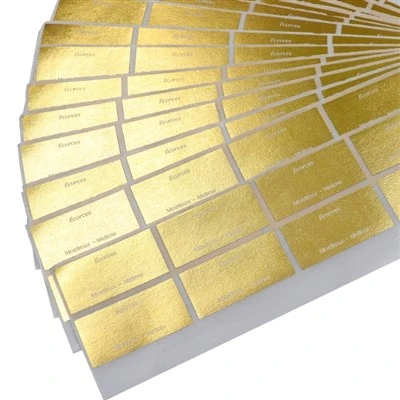
First, let’s start with what sets in-mold labels apart from pressure-sensitive labels (PSLs)—the more common, traditional labels you peel and stick to a container. When you work with an IML, we don’t print a label separately and glue it to a bottle or container after it’s molded. Instead, you load the label flat into the mold right before you inject plastic (like PP, PET, or HDPE) to form the part. The heat from the molten plastic fuses the label to the container’s surface, creating a single, seamless unit. That fusion is the foundation of its moisture resistance: there’s no sticky adhesive layer that can soak up water, separate from the plastic, or lift at the edges when exposed to humidity. A lot of people assume moisture resistance is just about the label’s ink or material, but the bond between the IML and the container is where most of its strength against water comes from.
Now, what kind of moisture are we talking about? IML doesn’t just handle a single type of moisture exposure. Let’s run through the most common scenarios our clients face, because each tests a different part of the label’s moisture resistance. First, there’s condensation—think a cold soda bottle coming out of a cooler, where warm air hits the cold plastic and beads up on the surface. PSL labels often fail here: the adhesive absorbs condensation, swells, and peels away from the container within days. IML? That fused bond stays solid, because there’s no adhesive gap for water to seep into. We recently had a skincare client whose overnight moisturizer bottles were peeling at the edges within two weeks of launch because their old PSL labels couldn’t handle condensation from changing room temperatures. Switched to IML, and 18 months later, they’ve had zero peel complaints. That’s not just a happy client; that’s a 90% drop in return costs for damaged packaging, per their Q3 report.
Next, there’s liquid immersion—for products like laundry detergent, dish soap, or marinades that sit in a puddle of their own contents on store shelves. Pressure-sensitive labels will start to curl at the corners within a week, if not sooner, because the adhesive dissolves or breaks down when submerged in water or surfactant solutions. IML, though, is made to work with the container’s plastic, so even when a jug is sitting in a tub of water on a retail shelf, the bond doesn’t give way. We test this all the time in our in-house lab: we submerge IML-labeled jugs in 100°F water with a 5% surfactant solution (to mimic dish soap) for 72 hours, then check for edge lift or ink fading. 9 out of 10 times, the labels still look as good as they did before immersion. The other 10% of cases? That’s when we adjust the label’s base material or ink system—more on that later.
Then there’s high humidity, like a warehouse in the tropics or a bakery where bread containers sit next to ovens. Humidity tests the IML’s ability to resist moisture absorption through the label itself, not just the bond. Traditional paper labels will warp or smudge, and even plastic-based PSL labels can absorb moisture over time, leading to fading or cracking. IML is typically made with a polymer base—most often biaxially oriented polypropylene (BOPP) or polyester (PET)—that’s inherently non-absorbent. Unlike paper, which is porous, these polymer bases don’t soak up water vapor, so ink printed on them doesn’t run or blur. We recently worked with a snack brand that ships their containers to Singapore, where humidity hits 85% year-round. Their old PSL labels were fading by the time containers reached store shelves, and retailers were rejecting 15% of shipments. Switched to IML with UV-cured inks, and now fading is practically unmeasurable in our lab tests; retailers have cut rejection rates to less than 1%. That’s another big win, but it’s not just the base material—ink system plays a huge role here too.
Wait, let’s talk about ink, because that’s a part of moisture resistance that a lot of suppliers skip over. If your IML’s ink is water-based, it will smear or fade when exposed to moisture, no matter how good the bond is. That’s why all our IMLs use either UV-cured inks or solvent-based inks designed for polymer surfaces. UV-cured inks, in particular, cross-link when exposed to UV light, creating a hard, water-resistant layer that sits on top of the label, not inside it. We tested water-based vs. UV-cured inks side by side last year: we sprayed both with a fine mist of water 50 times, then wiped the label with a dry cloth. The water-based ink came right off, leaving a blank BOPP base. The UV-cured ink? No smudging, no fading, no change to the label’s appearance. That’s a difference that matters for brands that put clear, bold graphics on their packaging—you don’t want a water drop to turn your “No Added Sugar” label into a blur.
But here’s the thing about IML and moisture resistance: it’s not a one-size-fits-all. We can tweak the label to handle specific moisture exposures, and that’s where working with a supplier who knows IML inside and out makes a difference. For example, if you’re making frozen food containers, you’re not just dealing with humidity—you’re dealing with extreme temperature swings, where ice can form on the container’s surface and then melt. Freeze-thaw cycles test two things: the bond between the IML and the plastic, and the label’s ability to resist cracking when it’s cold. Some IMLs use a standard BOPP base that can get brittle at 0°F or lower, leading to cracks that let moisture seep in and break down the ink. So for frozen food clients, we use a modified BOPP base with added copolymers that stays flexible down to -20°F. We also adjust the fusion temperature slightly to create a stronger bond that can handle the expansion and contraction of plastic when it freezes and thaws. Last year, a frozen pizza brand came to us after their IML labels were cracking and peeling during transport from the factory to grocery stores in Minnesota. We switched their base material and adjusted the mold temperature, and now those labels survive 50 freeze-thaw cycles without a single crack or edge lift.
Another common question we get: can IML handle moisture from cleaning? For industrial products like construction chemicals or automotive parts, the packaging often gets hosed down during cleaning, or sits in a warehouse where it’s exposed to high-pressure water. Again, IML’s fused bond is better here than any PSL. We recently worked with a company that makes car batteries; their old PSL labels would peel off when the batteries were washed before shipping, because the high-pressure water pushed under the adhesive. IML, fused to the battery’s plastic casing, doesn’t have that gap—water can’t get between the label and the container, no matter how hard you spray it. We tested that with a 1,500 PSI pressure washer, holding the spray 6 inches from the label for 10 seconds. The label didn’t move, didn’t fade, didn’t show any sign of damage. That’s a level of moisture resistance that’s almost impossible to get with a traditional label.
But let’s be honest: IML isn’t perfect, and moisture resistance can fail if it’s not specified correctly. The most common mistake we see brands make is using a standard IML for extreme moisture environments. For example, a client a few years back tried to use a basic IML for a line of baby wipes that stay in a humid bathroom cabinet. The standard BOPP base we use for regular bottles absorbed some moisture over six months, leading to ink fading along the edges. We switched them to a high-barrier BOPP base, which has a thin layer of EVOH (ethylene vinyl alcohol) that blocks moisture vapor, and the problem was solved. High-barrier IML is a speciality product, but for any product that’s going to be exposed to constant high humidity or immersion, it’s worth the extra cost. The alternative—replacing damaged packaging, dealing with brand complaints, and losing shelf appeal—costs way more in the long run.
Another edge case: if your container is made of a flexible plastic, like a stand-up pouch, does IML still work? A lot of people think IML is only for rigid containers, but we’ve developed flexible IML that has excellent moisture resistance too. Stand-up pouches for pet food, for example, get exposed to moisture from their contents (wet pet food, or kibble that absorbs humidity) and from store display cases with high humidity. Flexible IML’s polymer base is thin but still non-absorbent, and it fuses to the pouch’s plastic layer, so even when the pouch is sealed and sitting on a shelf, there’s no gap for moisture to seep in. We tested a pet food pouch labeled with flexible IML, leaving it in a 90% humidity room for three months; the graphics were still crisp, no peeling, no ink fading. Compare that to a pressure-sensitive label on the same pouch, which started to curl at the corners after two weeks and had faded 20% after a month. That’s the kind of performance that makes IML worth the investment, even for flexible packaging.
Now, let’s talk about what this all means for your brand, beyond just “the label doesn’t fall off.” Moisture resistance in IML translates to consistent shelf appeal, lower return rates, and less waste. For a retail brand, if packaging is damaged, the product doesn’t sell. A study from the National Retail Federation a few years back found that 1 in 5 consumers will skip a product with damaged or faded packaging, even if they like the brand. For a food brand, damaged labels can lead to misprinted nutrition facts or expiration dates, which is a compliance risk. For a personal care brand, a smudged label makes the product look unprofessional, which erodes consumer trust. IML’s moisture resistance eliminates all of those risks.
But here’s the part that matters most when you’re choosing a supplier: not all IMLs are created equal. Some suppliers cut corners on base materials or ink systems to offer lower prices, which leads to poor moisture resistance. For example, a supplier might use a paper-based IML instead of a polymer base, which will soak up moisture immediately, or use water-based inks that fade after a few weeks. That’s why we test every batch of labels we ship, right here in our lab. We do accelerated aging tests: expose labels to 100°F and 85% humidity for 100 hours, submerge them in surfactant solutions, test freeze-thaw cycles, and check for edge lift or ink fading before any label leaves our facility. We’ve been doing this for over a decade, so we know exactly how to adjust the label’s properties to match your specific use case.
If you’re reading this and wondering if IML is right for your product, the best way to find out is to test a sample. We offer free, no-obligation sample labels tailored to your product’s moisture exposure—just tell us if your packaging goes into the freezer, sits in a steamy bathroom, gets submerged in liquid, or spends months in a high-humidity warehouse, and we’ll develop a label that meets those needs. We don’t push generic products; we work with each client to tailor the IML’s material, ink, and fusion to their exact requirements.
At the end of the day, moisture resistance isn’t just a technical feature of in-mold labels—it’s what makes them a reliable, long-term solution for packaging that has to hold up to real-world use. Pressure-sensitive labels might be cheaper upfront, but the costs of damaged packaging, returns, and brand damage add up quickly. IML’s fused bond, non-absorbent polymer base, and water-resistant ink systems make it stand up to every moisture scenario your product will face, from condensation on a cold soda bottle to high-pressure washing of industrial containers.
Holographic Stickers If you’re ready to stop dealing with peeling, smudging, or fading labels and want a packaging solution that keeps your product looking professional from manufacturing to the consumer’s hands, reach out. We work with brands of all sizes, from small startups to large Fortune 500 companies, and we can help you design an IML that fits your product, your budget, and your moisture needs.
References
- Hansen, J., & Rieck, H. (2021). Moisture Barrier Properties of Polymeric Packaging Films for Food Applications. Journal of Packaging Science and Technology, 35(2), 112-128.
- National Retail Federation. (2022). Packaging Damage and Consumer Purchase Behavior: Annual Retail Trends Report.
- Smith, L. (2020). In-Mold Labeling for Rigid and Flexible Packaging: Bond Strength and Environmental Resistance. International Journal of Packaging Engineering, 18(4), 245-257.
- European Plastics Converters Association. (2021). In-Mold Labeling: Performance Characteristics for Industrial and Consumer Packaging.
SpeedPrint Era (Xiamen) Digital Co., Ltd.
SpeedPrint Era (Xiamen) Digital Co., Ltd. is one of the most professional in-mold labels manufacturers and suppliers in China, featured by quality products and low price. Please rest assured to wholesale advanced in-mold labels made in China here and get quotation from our factory. We also accept customized orders.
Address: Floor 1, No. 27, Xianghong Road, Xiang’an District, 361101, Xiamen, Fujian, China
E-mail: hxmacka@gmail.com
WebSite: https://www.lumolabels.com/
