Hey there, welcome to our little spot talking all things custom ultra thin relays—let’s cut to the chase, since you’re probably here because you’ve got a project that needs those space-saver little guys, and you’re stuck on: what the actual lead time is for a custom one? I’m Jake, one of the lead relay designers here, and I’ve spent the last 7 years in this exact niche, so I’ve seen every single lead time curve, last-minute crunch, and “wait, can you turn this around by next week?” request. Let’s break this down like we’re hanging out in our factory break room, no stuffy jargon, no generic corporate fluff. Ultra Thin Relay
First off, let’s get one thing straight up front: custom ultra thin relays aren’t off-the-shelf soda cans you grab from a convenience store. They’re tailored to your exact specs—like, if your device needs a relay thinner than a credit card, rated for 5A at 12V, and built to survive 10,000 cycles in a tight aerospace enclosure, we can’t just pull a random model and tweak it. That means lead time depends almost entirely on what you’re actually asking for, not a one-size-fits-all number. I’ve had people ask us the same question a dozen times this month, so let’s walk through the main factors that move the needle, from shortest to longest possible timelines.
Let’s start with the absolute fastest we can swing a custom ultra thin relay: 4 weeks. Wait, slow your roll—when does that happen? Only if your custom ask is super minimal tweaks to an existing base model. Like, say our standard UT-002 relay is 0.2mm thick, but your design just needs the coil voltage bumped from 5V to 3.3V and the pin layout shifted to fit your PCB’s edge connector. No new materials, no retooling the mold for the internal frame, no full electrical testing from scratch. We just re-calibrate the coil winders, rerun the pin stamping jig, and knock out a small prototype batch. I had a client last month in the wearable tech space who needed this exact tweak for a fitness tracker that kept overheating; we got them a 100-unit prototype batch in 28 days, and they rolled it out 2 weeks after that. That’s the sweet spot for “fast custom” ultra thin relays, but that only works if you’re basically just tuning an existing part, not building it from a blank sheet.
Now, the most common lead time we quote for most custom orders: 8 to 12 weeks. That’s for when you’ve got a solid spec list that needs a little more work—like, you want the relay thinner than our current base models (say, 0.18mm, which is thinner than a dime), or you need it rated for a higher temperature (like 125°C for industrial outdoor sensors) or a special coating to resist corrosion for marine gear. Let’s break down why that timeline takes that long. First, the quote phase alone is a week: we take your CAD files, your performance specs, and cross-check them against our material libraries and manufacturing lines. A lot of people skip this, but we’ll flag if something’s impossible here—like, you can’t make a 0.1mm thick relay carry 15A without it overheating, so we’ll tell you straight up instead of wasting your time. Once we lock the quote, the next step is prototyping: we machine the custom internal parts (the contact arms, the magnetic core) from scratch, test 10-15 sample units for cycle life, electrical resistance, and thinness consistency. That takes 3 weeks right there, because we can’t just print these parts—they’re tiny, so every tweak needs a physical test. Then comes tooling for production: the stamping dies for the contact points, the molding for the plastic housing. That’s another 2 weeks, because we have to make sure each part fits perfectly when stacked into that ultra thin build—even a 0.01mm misalignment can make the relay not work. Then final production and QC: we run a full batch, test every 10th unit for compliance, package it, and ship. That adds up to 8-12 weeks, and that’s for a solid, well-defined custom order.
Now, the longest lead time we see: 16 to 20 weeks, and that’s for super custom, high-stakes orders, like aerospace or medical devices. Those are the ones where you need the relay to meet ISO 13485 (for medical) or AS9100 (for aerospace) standards, use a specialized material like high-grade ceramic for the housing, or need custom low-level switching for diagnostic equipment—think a pacemaker component that has to switch tiny currents without interference. Why so long? First, regulatory documentation: we have to submit test reports to third-party certifiers, which adds 3-4 weeks right there. Then, specialized material sourcing: ceramic housings aren’t something we keep in stock, so we have to get them from a certified vendor, which has their own lead times, sometimes plus 2 weeks of pre-testing for purity. Also, these orders are often for small batches (like 500 units) so we can’t run them on our regular mass production lines—we have to set up a dedicated micro-line, which means shutting down a small section of our factory for 2 weeks to reconfigure it. I had a medical device client last year who needed a custom ultra thin relay for a insulin pump; we quoted them 18 weeks, and hit it dead on, because every step was mapped out to meet FDA traceability rules. No cutting corners here, because a failed relay in a medical or aerospace part isn’t just a delay—it’s dangerous.
Wait, but hold on—what about rush orders? A lot of people ask if we can skip steps for a fast turnaround, and yeah, sometimes we can, but there’s a catch. We’ve turned around a prototype batch in 10 days once for a drone client whose relay failed a week before a trade show, but that was only because we used an off-the-shelf core and swapped out the plastic housing, no new electrical parts. But for a production order? Rush lead times usually cut down timelines by 2-3 weeks, but only if you’re flexible on specs. We don’t do half-baked rush jobs, though—we’ll only offer that if your specs are within 10% of an existing model, because rushing a full custom order leads to defects, and that’s not fair to either of us.
Now, let’s talk about the hidden factors that people forget, because those can make lead time swing by a few weeks. First, order volume. A prototype batch of 50 units is way faster than a production run of 10,000 units, because a big order needs extra material testing and batch-level QC. Then, spec changes. If you send us a spec, we prototype it, you say “wait, can we make the relay even thinner?” that adds 2 more weeks, because we have to re-test the whole unit. Another big one: material lead times. If you need a special copper alloy for the contacts that’s only made in Germany, that can add 4 weeks to the timeline if that vendor is backlogged (and let’s be real, most component vendors have been backlogged since 2022). We always check material lead times when we send the initial quote, so we don’t surprise you later, but it’s something to keep in mind if you’re working with exotic materials.
Wait, let’s also bust a common myth here: people think “custom = way more expensive and way slower”, but that’s not always true. For example, if you already have a CAD file for an ultra thin relay that’s just slightly off our existing models, our engineers can tweak it and get you a quote in 3 days, not a week. We actually prioritize working with clients who have a clear spec, because that keeps lead times on track. If you just say “I need a thin relay that works for my device” with no specs, that takes longer, because we have to ask a million questions: what voltage? What current? How thin exactly? What environment will it be in? Without that, we can’t give you an accurate timeline, or a functional part.
Let me give you a real example to make this concrete. Last quarter, we had three custom ultra thin relay orders: one was a wearable client who needed a 0.22mm thick relay with a 3.3V coil, pin layout shifted—lead time 5 weeks, prototype batch of 200, no surprises. Second was an industrial sensor client who needed a 0.19mm thick relay rated for 105°C, coated with a corrosion-resistant polymer—lead time 10 weeks, batch of 1,000, hit every milestone. Third was a defense client who needed a custom ultra thin relay that could survive 1,000 cycles in -40°C temps, meet military specs—lead time 19 weeks, batch of 500, passed all military testing with no issues. That’s exactly the range we talk about, and every single timeline was based on the specs the client sent.
Now, what if you’re stuck, and you’re not sure what specs you even need? We get that a lot—engineers are busy, their design team is swamped, they don’t have time to dig into every relay’s electrical rating. Our team is super hands-on, so we can work with you to narrow down the specs. Last month, a startup founder came to us saying “I need a thin relay for my smart thermostat, but I have no clue what voltage it uses” — we asked a few quick questions (what’s the thermostat’s power source, how many devices does it need to switch) and helped them land on a 12V coil, 5A rating, and a 0.2mm thickness, which put their lead time at 9 weeks, perfect for their launch timeline.
Here’s the thing about custom ultra thin relays: there’s no magic number, but there is a clear process that lets us give you an accurate timeline before you even sign a quote. We don’t do vague “6-12 weeks” quotes that leave you hanging—when we send over a proposal, we break down every step: quote review, prototyping, tooling, production, shipping, with exact dates for each. That’s not just good practice, that’s how we’ve stayed in this business for 12 years—clients come back to us because we don’t miss timelines, even when custom parts are involved.
Now, if you’re reading this and you’ve got a project that needs a custom ultra thin relay, the next step is simple: don’t waste time googling generic lead time answers. Send us your specs (even rough ones—voltage, current, max thickness, what device it’s for) and we’ll send you a tailored quote with an exact lead time in 3 days max. No hoops to jump through, no sales rep bugging you every day, just our engineering team working with yours to get you the part you need, when you need it. We’ve got experience with wearables, industrial gear, medical devices, even aerospace, so whatever your project is, we can adjust.

Wait, one last note: lead time isn’t the only thing that matters here. We’ve had clients pick a vendor with a 4-week lead time, only to get a part that fails testing, so they have to reorder, adding another 8 weeks total. We’d rather quote you a 9-week lead time and give you a part that works on the first try than rush something that messes up your project. That’s why we test every sample, every batch, no exceptions. So when we say a timeline, you can trust it.
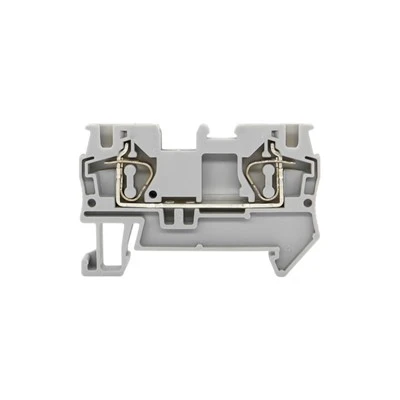
European Style Terminal Block If you’re ready to talk about your custom ultra thin relay, just reach out to our team—we’ll grab your specs, run through the timeline, and answer every question you have. No formal forms, no endless waiting, just real talk about what you need and when we can get it to you. That’s how we roll here.
References
- International Electrotechnical Commission (IEC) 61810:2020, Electromechanical elementary relays – Safety requirements
- Aerospace Industries Association (AIA) AS9100D:2016, Quality Management Systems – Requirements for Aerospace Organizations
- International Organization for Standardization (ISO) 13485:2016, Medical devices – Quality management systems – Requirements for regulatory purposes
- Relay Industry Association (RIA) 2023 Custom Relay Lead Time Benchmark Report
Zhejiang Weide Electric Co., Ltd.
Zhejiang Weide Electric Co., Ltd. is one of the most professional ultra thin relay manufacturers and suppliers in China, featured by quality products and low price. If you’re going to buy the newest ultra thin relay, welcome to get free sample from our factory. We also accept customized orders.
Address: No. 555, South Binhe 2nd Road, Yueqing City, Zhejiang Province, China
E-mail: zjwdir@wdirele.com
WebSite: https://www.chweide.com/
