Hey there! As a supplier of Switched Reluctance Motors (SRMs), I’ve seen firsthand how crucial energy-saving operation is in today’s industrial landscape. Not only does it help cut down on costs, but it also contributes to a more sustainable future. So, let’s dig into how we can achieve energy-saving operation of an SRM. Switched Reluctance Motor
Understanding the Basics of Switched Reluctance Motors
First off, a quick refresher on SRMs. These motors are simple in construction, with a stator having concentrated windings and a rotor made of salient poles without any windings or permanent magnets. The operation is based on the principle of reluctance torque, where the rotor aligns itself with the magnetic field generated by the stator windings.
The key to energy-saving lies in understanding the characteristics of SRMs. Unlike other types of motors, SRMs have a highly nonlinear torque – current relationship. This means that the torque produced is not directly proportional to the current flowing through the stator windings. Also, SRMs can operate over a wide range of speeds, from very low to extremely high, which gives us some flexibility in optimizing their operation.
1. Optimal Control Strategies
One of the most effective ways to save energy in an SRM is through optimal control strategies. The most common control methods for SRMs are current chopping control, angle position control, and voltage PWM control.
Current Chopping Control
This is a basic control method where the current in the stator windings is limited to a certain value. When the current reaches the preset limit, the power supply to the winding is cut off, and it is re – applied when the current drops below a lower threshold. By carefully selecting the current limits, we can control the torque production more precisely. For example, in low – load conditions, we can reduce the current limit to minimize power consumption without sacrificing too much on performance.
Angle Position Control
In this method, the timing of the current pulses in the stator windings is adjusted based on the rotor position. By advancing or retarding the turn – on and turn – off angles of the stator current, we can optimize the torque production and reduce energy losses. For instance, at high speeds, advancing the turn – on angle can help in generating more torque with less current, thus saving energy. However, finding the optimal angles requires a good understanding of the motor’s characteristics and the operating conditions.
Voltage PWM Control
This control method uses pulse – width modulation (PWM) to vary the average voltage applied to the stator windings. By adjusting the duty cycle of the PWM signal, we can control the current flowing through the windings and hence the torque produced. In some cases, using a lower – frequency PWM can reduce the switching losses in the power electronics, which in turn saves energy.
2. Efficient Power Electronics
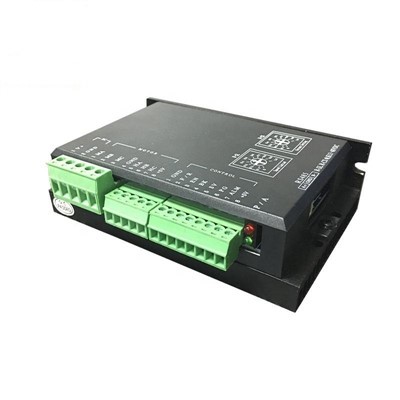
The power electronics used to drive the SRM play a significant role in its energy efficiency. The inverter is the key component here, as it converts the DC power from the power supply into the appropriate AC signals to drive the stator windings.
Selecting the Right Inverter
When choosing an inverter for an SRM, we need to consider its efficiency, switching frequency, and power rating. A high – efficiency inverter can reduce the power losses during the conversion process. For example, inverters with low – on – state resistance MOSFETs or IGBTs can minimize the conduction losses.
Reducing Switching Losses
Switching losses occur when the power switches in the inverter turn on and off. These losses can be significant, especially at high switching frequencies. To reduce these losses, we can use soft – switching techniques. Soft – switching involves creating conditions where the voltage across the switch is zero when it turns on or off, thus eliminating the switching losses.
3. Load Matching
Matching the SRM to the load is another important aspect of energy – saving operation. An oversized motor will consume more energy than necessary, while an undersized motor may not be able to meet the load requirements, leading to inefficiencies.
Proper Sizing
Before selecting an SRM for a particular application, we need to accurately determine the load requirements, including the torque and speed. We should choose a motor that can meet the maximum load requirements while operating close to its rated efficiency under normal operating conditions. For example, if a conveyor system requires a certain amount of torque to move the load at a specific speed, we should select an SRM with a torque – speed characteristic that matches these requirements.
Variable Load Handling
In applications where the load varies, such as in a machine tool or a fan, we can use a control system that adjusts the motor’s operation according to the load. For instance, when the load is low, the control system can reduce the current or adjust the control angles to save energy.
4. Maintenance and Monitoring
Regular maintenance and monitoring of the SRM can also contribute to energy – saving operation.
Maintenance
Proper maintenance includes keeping the motor clean, checking the bearings for wear, and ensuring that the electrical connections are tight. A dirty motor can have higher friction losses, while loose connections can cause electrical resistance, which leads to increased power consumption. For example, if the bearings are worn out, the motor may have to work harder to overcome the additional friction, resulting in higher energy consumption.
Monitoring
By monitoring the motor’s parameters, such as current, voltage, temperature, and speed, we can detect any abnormal operating conditions early on. For instance, if the temperature of the motor is rising above normal, it could indicate a problem with the cooling system or an over – load condition. By taking corrective actions promptly, we can prevent the motor from operating inefficiently and potentially damaging itself.
Conclusion
Achieving energy – saving operation of a Switched Reluctance Motor involves a combination of optimal control strategies, efficient power electronics, load matching, and proper maintenance and monitoring. As a supplier, I’m committed to helping our customers implement these measures to get the most out of their SRMs.
Permanent Magnet DC Moto If you’re in the market for a high – efficiency SRM or need advice on how to optimize the energy – saving operation of your existing motors, we’re here to help. Let’s start a conversation about your specific needs and how we can work together to achieve your energy – saving goals.
References
- Miller, T. J. E. "Switched Reluctance Motors and Their Control." Magna Physics Publishing, 1993.
- Krishnan, R. "Switched Reluctance Motor Drives: Modeling, Simulation, Analysis, Design, and Applications." CRC Press, 2010.
- Wang, X., & Deng, Z. "Advances in Switched Reluctance Motor Drives: Topologies, Modeling, Control, and Applications." IEEE Transactions on Industrial Electronics, 2017.
Zibo Auric Mechanical and Electrical Technology Co., Ltd.
As one of the leading switched reluctance motor manufacturers and suppliers in China, we warmly welcome you to buy advanced switched reluctance motor for sale here from our factory. All customized motors are with high quality and competitive price.
Address: B419, High-tech Entrepreneurship Park, High-tech Zone, Zibo City
E-mail: cui@auricmotor.com
WebSite: https://www.auricmotor.com/
