Can limestone powder be used in the plastic industry?
In the dynamic realm of the plastic industry, continuous exploration of new additives and fillers is crucial for enhancing product performance, reducing costs, and achieving environmental sustainability. As a dedicated supplier of high – quality limestone powder, I often encounter inquiries about whether limestone powder can find its place in the plastic industry. The answer is a resounding yes, and in this blog, I’ll delve into the details of how limestone powder can be utilized in the plastic sector, its benefits, applications, and more. Limestone Powder
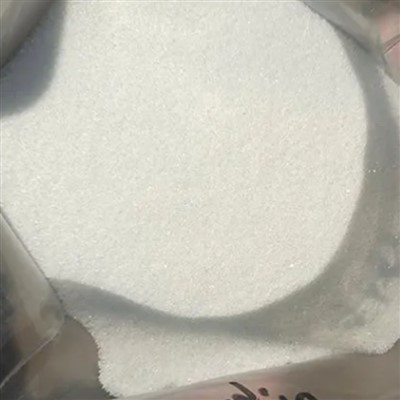
Properties of Limestone Powder
Limestone powder is derived from limestone, a sedimentary rock composed mainly of calcium carbonate (CaCO₃). Depending on the source and processing methods, the purity of calcium carbonate in limestone powder can vary. High – quality limestone powder can have a calcium carbonate content of over 95%.
One of the key physical properties of limestone powder is its particle size. It can be processed into various particle sizes, ranging from coarse to ultra – fine. Fine – grained limestone powder has a large surface area, which can have a significant impact on its interaction with plastic polymers. Additionally, limestone powder has a relatively high hardness, which provides certain mechanical strength when incorporated into plastics. Chemically, calcium carbonate is stable under normal conditions, making it suitable for use in a wide range of plastic manufacturing processes.
Benefits of Using Limestone Powder in the Plastic Industry
- Cost Reduction
One of the most significant advantages of using limestone powder in the plastic industry is cost reduction. Plastic raw materials can be quite expensive, especially high – performance polymers. By adding limestone powder as a filler, manufacturers can reduce the amount of expensive plastic resin used while still maintaining acceptable product quality. Limestone is a widely available and relatively inexpensive natural resource, so using its powder can significantly cut down on production costs. For example, in the production of polypropylene (PP) products, adding a certain proportion of limestone powder can reduce the overall material cost by up to 20 – 30% without sacrificing too much on the mechanical properties of the final product. - Improved Mechanical Properties
Limestone powder can enhance the mechanical properties of plastics in several ways. When properly dispersed in the plastic matrix, it can act as a reinforcement agent. For instance, it can improve the stiffness and dimensional stability of plastics. In polyethylene (PE) films, the addition of limestone powder can increase the film’s tensile strength and tear resistance. This is because the fine particles of limestone powder can distribute stress within the plastic, preventing the formation and propagation of cracks. Moreover, it can also reduce the shrinkage rate of plastics during the molding process, ensuring that the final products have more accurate dimensions. - Enhanced Processability
In some plastic manufacturing processes, limestone powder can improve the processability of plastics. For example, in extrusion and injection – molding processes, it can reduce the melt viscosity of plastics. This means that less energy is required to process the plastics, and the production speed can be increased. The fine particles of limestone powder can also act as lubricants between polymer chains, facilitating the flow of the molten plastic through the processing equipment, such as extruders and molds. - Environmental Sustainability
Using limestone powder in the plastic industry is also an environmentally friendly choice. Since it is a natural material, it reduces the reliance on synthetic and potentially harmful chemicals. Additionally, as it can replace a certain amount of plastic resin, it helps to conserve non – renewable petroleum – based resources. Moreover, some limestone – filled plastics are more biodegradable compared to pure plastics, which can help to reduce the environmental impact of plastic waste.
Applications of Limestone Powder in the Plastic Industry
- Packaging Plastics
In the packaging industry, plastics are widely used for food packaging, consumer product packaging, and industrial packaging. Limestone powder can be added to various packaging plastics, such as polyethylene terephthalate (PET), polypropylene (PP), and polyethylene (PE). For food packaging, the addition of limestone powder can improve the barrier properties of the plastic, reducing the permeability of oxygen and moisture. This helps to extend the shelf life of food products. In consumer product packaging, it can enhance the stiffness and printability of plastic films, making the packaging more attractive and durable. - Plastic Pipes and Profiles
For plastic pipes and profiles, which are used in construction, irrigation, and other infrastructure projects, limestone powder offers several benefits. It can increase the stiffness and impact resistance of pipes, making them more suitable for underground installation and high – pressure applications. In the production of PVC pipes, the addition of limestone powder can improve the pipe’s dimensional stability, reducing the risk of deformation during installation and use. - Automotive Plastics
The automotive industry uses a large amount of plastics for interior and exterior components. Limestone powder can be incorporated into these plastics to improve their mechanical properties and reduce costs. For example, in automotive dashboards, door panels, and bumpers made of polypropylene or ABS plastics, limestone powder can enhance the stiffness and impact resistance, while also reducing the weight of the components, which in turn can improve fuel efficiency.
Quality Requirements for Limestone Powder in the Plastic Industry
To ensure the effective use of limestone powder in the plastic industry, certain quality requirements need to be met.
- Particle Size and Distribution
The particle size of limestone powder is of great importance. For most plastic applications, a fine and uniform particle size distribution is preferred. Fine particles can better disperse in the plastic matrix and have a more significant impact on the mechanical and processing properties of plastics. Generally, the particle size of limestone powder for plastic use ranges from a few micrometers to tens of micrometers. - Purity
High purity is essential to avoid the introduction of impurities that may affect the performance of plastics. Limestone powder with a high calcium carbonate content can provide more stable chemical and physical properties. Impurities such as iron oxide, magnesium oxide, and clay should be kept to a minimum. - Surface Treatment
In some cases, surface treatment of limestone powder is necessary to improve its compatibility with plastics. Surface treatment agents can be used to modify the surface properties of limestone particles, making them more hydrophilic or hydrophobic depending on the type of plastic. This can enhance the dispersion of limestone powder in the plastic matrix and improve the overall performance of the composite material.
Our Limestone Powder as a Supplier
As a leading supplier of limestone powder, we are committed to providing the highest – quality products that meet the strict requirements of the plastic industry. Our limestone mines are carefully selected to ensure a high – purity raw material source. We use advanced processing technologies to control the particle size and distribution of our limestone powder precisely. Through strict quality control measures, we guarantee that each batch of product meets the specified purity and quality standards.
Moreover, we offer customized surface treatment services according to the specific needs of our customers. Our technical team can provide professional advice on the appropriate formulation and process parameters when using our limestone powder in plastic production. We understand that different plastic products may have different requirements, and we strive to provide tailored solutions to our customers.
In conclusion, limestone powder has proven to be a valuable additive in the plastic industry. Its ability to reduce costs, improve mechanical properties, enhance processability, and contribute to environmental sustainability makes it an attractive choice for plastic manufacturers. As a reliable limestone powder supplier, we are ready to support the plastic industry with our high – quality products and professional services.
Dolomite Powder If you are a plastic manufacturer looking to incorporate limestone powder into your production process, or if you want to learn more about how our limestone powder can meet your specific needs, please feel free to contact us for a detailed discussion. We are eager to start a productive cooperation with you and look forward to helping you achieve better product performance and cost – effectiveness in your plastic manufacturing.
References
- Kleemann, W., & Davidson, P. (2000). Calcium Carbonate: from the Mine to the Packaging. Wiley – VCH.
- Bhunia, S. K., & Jana, S. C. (2016). Influence of Calcium Carbonate Particles on the Properties of Polypropylene. Polymer Composites, 37(11), 3171 – 3180.
- Plastics Additives Handbook, 5th Edition, edited by Hans Zweifel, Carl Hanser Verlag.
Chaohu Jirun Energy Conservation and Environmental Protection Technology Co., Ltd.
We’re well-known as one of the leading limestone powder manufacturers and suppliers in China, also support customized service. Welcome to wholesale high quality limestone powder in stock here from our factory. If you have any enquiry about pricelist, please feel free to email us.
Address: No. 9, north of the intersection of Weihai Road and Weili Avenue, within the industrial park of Yinping Town, Chaohu City, Hefei City, Anhui Province.
E-mail: 13305654485@163.com
WebSite: https://www.chaohujirun.com/
