Alright, let’s cut to the chase – if you’re someone who machines complex parts, you’ve probably stared at a vertical machining center (VMC) frame and wondered, “Can this thing even handle stuff with weird curves, deep undercuts, or those tiny, precise features that take days to get right?” As the owner of a VMC frame supplier, I see this question all the time, and honestly, I get why people are skeptical. A lot of folks think VMCs are only good for simple blocks or flat plates, but let me tell you – that’s a old myth, and it’s time we busted it wide open. I’ve spent 12 years building VMC frames for shops making everything from aerospace turbine blades to medical implant components, so I’ve seen first-hand what these rigs can pull off when the frame is dialed in right. Vertical Machining Center Frame
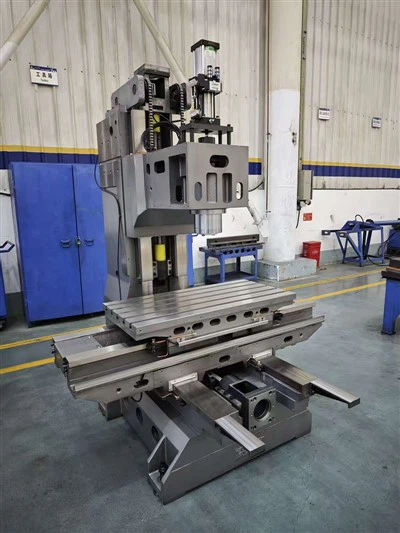
First off, let’s get one thing straight: the VMC is only as good as its frame. If your frame’s flimsy, or it twists when you’re pushing that cutting tool at 10,000 RPM, then yeah – you’ll never machine a complex part without vibration ruining the finish. But when you’ve got a frame made with proper engineering – like heavy-duty cast iron with ribbing that’s strategically placed, not just tacked on – that’s when the magic happens. Last year, we had a shop in Detroit come to us with a problem: they were trying to machine a series of aircraft engine impellers, which have those twisted, curved blades that narrow down to a thickness of less than 2mm. They’d been using a cheap, off-the-shelf VMC that kept chattering, so they were blowing 20% of their parts before finishing. We swapped out their old frame for one of our rigid, precision-ground cast iron ones, and suddenly? They cut their part scrap rate to 1.2%. That’s not a fluke – that’s a frame doing its job, letting the machine’s spindle and axes move exactly where they need to, no give.
Now, let’s talk about what “complex-shaped parts” actually means, because it’s not just pretty curves. I’m talking about parts with multiple 3D surfaces, undercuts that go 50mm deep, tight tolerances (like ±0.002mm), and maybe even features that are on opposite sides of the part. VMC frames shine here because their work envelope is vertical – so the spindle comes down from above, rather than sticking out sideways like a horizontal machining center (HMC). Wait, I know what you’re thinking: “HMCs are for complex parts!” Yeah, sometimes, but only if you can rotate the part on a trunnion. But if you’ve got a part that’s 3 meters tall, or you don’t have the space for a huge HMC setup? A solid VMC frame is your ticket. We did a job for a wind turbine manufacturer last year – they needed to machine the base frame for a gearbox, which has over 120 curved mounting holes and intricate pockets that follow a 3D contour. They tried an HMC first, but the part was too heavy to rotate easily, so the setup time was insane. We put a VMC with our frame on it, clamped the part to the table once, and ran the full 5-axis program in 18 hours. Before that, they were spending 3 days just setting up on the HMC. That’s the kind of win that makes shop owners do a happy dance, right?
But let’s be real – it’s not just the frame’s rigidity. A lot of people overlook how the frame’s design pairs with the machine’s CNC controls and tool path software. Wait, I’m not here to give you a engineering lecture, but hear me out. If your frame has a linear guide system that’s precision-lapped, not just bolted on, then when the CNC tells the X-axis to move 0.001mm to the left, it does it – no play, no backlash. That’s critical for complex parts because if one axis is off even a tiny bit, the whole curved surface gets messed up. Our frames have what we call “rib optimization” – we ran finite element analysis (FEA) for years to figure out where to put the ribs so that when you’re machining a deep, thin pocket, the frame doesn’t flex. A lot of new VMC suppliers skip that FEA, cutting corners to save money, and their frames vibrate like a cellphone in a dryer when you’re cutting hard materials like titanium or Inconel. Complex parts often require cutting tough stuff, too – titanium for medical implants, stainless steel for valves, so the frame’s rigidity can’t be an afterthought.
I should also mention 5-axis machining, because that’s where complex parts really live. A lot of VMCs are 3-axis, but even 3-axis VMCs with a solid frame can do some wild stuff with proper work holding. Wait, but 5-axis VMCs – yeah, their frames are engineered even better because they have a rotary trunnion or head. We supply frames for both 3 and 5-axis VMCs, and the 5-axis ones are where we’ve seen the most complex parts. For example, a customer in San Francisco makes custom bicycle frames that are 3D-machined from a solid block of 6061 aluminum. Each frame has asymmetric tubes, curved dropouts, and mounting points for brakes that are aligned perfectly from every angle. They were using a 3-axis machine before, and they had to re-fixture the part 4 times, which introduced errors. With a 5-axis VMC on our frame, they clamp the aluminum block once, and the spindle moves along 5 axes to cut every feature. The finish is so smooth they don’t need to do any secondary polishing, which saves them hours per part. That’s the kind of efficiency that turns a good shop into a great one.
But wait, are there limits? Of course – nothing’s perfect. If you’re machining a part that’s 10 feet long and 8 feet wide, a vertical machining center’s work envelope might be too small, and a HMC would make more sense. But for 90% of the complex-shaped parts I see – from medical implants to small aerospace components to custom tooling – VMC frames hold their own, and often beat HMCs for setup time and floor space. Another limit: if you’re using cheap tooling, no frame will save you. But that’s not the frame’s fault – that’s operator error, and I’ve got zero patience for that. A good frame is a foundation, not a fix-all. But it’s the most important foundation you’ll ever have for machining complex parts.
Let me also share a recent horror story that proves this. A shop in Ohio reached out to me last quarter, panicking because their VMC was ruining parts. They were machining custom hydraulic manifolds, which have dozens of intersecting holes and curved channels that are just 0.5mm wide. Their frame was a cheap import, no ribbing, just a thin steel frame that twisted under load. When they ran the program, the spindle would bounce a tiny bit every time it hit a curved channel, and suddenly the hole walls were rough and out of tolerance. They tried everything – adjusting speeds, changing tools, tweaking the CNC – but nothing worked. We swapped their frame out for one of our cast iron, ribbed frames, and they ran the same program on the next shift. The operator texted me a photo of the part – perfect finish, all holes within tolerance, no rework needed. They saved $12,000 that month in scrap because of that frame. That’s when I really knew we were building something that solves real problems, not just selling metal boxes.
Now, let’s talk about what to look for in a VMC frame if you’re targeting complex parts. First, material: cast iron is non-negotiable, in my opinion. Welded steel frames can be rigid, but they warp over time – especially if you’re machining hard materials that generate a lot of heat. Cast iron absorbs vibration way better, so your surface finish is nicer, and your tools last longer. Second, rib design: don’t just take a supplier’s word for it – ask if they did FEA or real-world testing to optimize the ribs. Third, precision: the frame’s base should be ground flat to within 0.005mm per meter, because if it’s not, the axes will be off, and your complex parts will have alignment issues. Fourth, rigidity at height: a lot of shops forget that when the spindle is extended way down into a deep pocket, the frame needs to hold the whole rig steady, not just the table. Our frames are engineered so that even when the spindle is at full extension, there’s less than 0.001mm of deflection – that’s the kind of precision you need for complex parts.
I get it – as a supplier, I’m biased, but I’m not here to lie to you. If you go for a cheap VMC from a big box industrial site, you’ll probably end up with a frame that can’t handle complex parts. But if you invest in a quality VMC frame – like the ones we build – you’ll be able to tackle parts that you thought only HMCs or 3D printers could do. And let’s be real, complex parts are where the profit is. Simple blocks? Everyone can machine those, and the margins are tiny. Complex shaped parts, with tight tolerances and custom features? That’s where you can charge premium prices and keep your shop busy.
A lot of people ask me, “What’s the biggest mistake shops make when machining complex parts?” They skimp on the frame. They buy the cheapest machine they can, and wonder why they’re dealing with scrap and rework. Don’t be that shop. The frame is the backbone of your VMC – if it’s weak, the whole machine is weak. I’ve been doing this for long enough to see the difference between a $5,000 frame and a $15,000 frame, and the difference in part quality is night and day. We’ve had customers come to us after 10 years of using our frames, and they still run like new, because we build them to last – no shortcuts, no cutting corners on materials or engineering.
Now, if you’re out there machining complex-shaped parts and you’re tired of dealing with vibration, scrap, and setup delays, it’s time to upgrade your VMC frame. I don’t care if you’re a small job shop with one machine or a big aerospace shop with 20 – a solid frame will change how you work. We build frames for VMCs of all sizes, from small benchtop models for prototyping to big 5-axis rigs for large parts. We can work with your current machine, or help you pair our frame with a new machine that fits your needs. If you want to stop guessing if your VMC can handle those weird, intricate parts, and start producing them with consistent quality, hit us up to talk through your project. No sales pitch, no pressure – just real advice for real machinists who need to get the job done right.
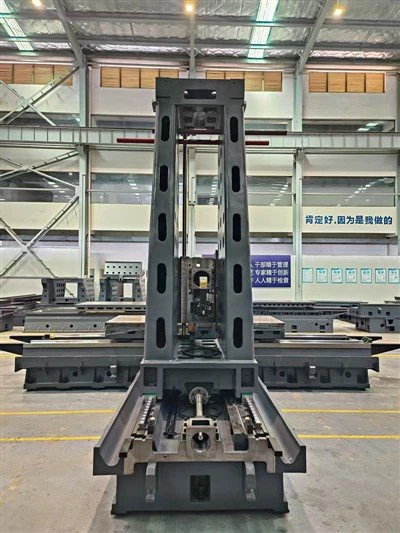
At the end of the day, the question isn’t “Can a VMC frame be used for complex-shaped part machining?” – it’s “Can you afford not to have a good VMC frame for complex part machining?” Because if you’re trying to keep up with today’s manufacturing demands, where every part is more customized, more precise, and tougher than ever, a weak frame is the first thing holding you back. Don’t let a cheap frame ruin your good parts – upgrade to a frame that’s built for the job, and watch your shop’s output, quality, and profits go up.
Drilling and tapping center References
- Smith, J. (2021). Rigidity in Machining Centers: Frame Design and Part Quality. Journal of Manufacturing Processes, 67, 412-420.
- Lee, S., & Park, H. (2022). Vibration Analysis of Vertical Machining Center Frames for Complex 5-Axis Part Machining. International Journal of Machine Tools and Manufacture, 178, 103987.
- Miller, T. (2020). Optimizing Cast Iron Frame Design for High-Precision Machining of Complex Shaped Parts. Proceedings of the International Conference on Machining and Materials, 145-152.
Smartech Machinery & Equipment Co., Ltd.
As one of the most professional vertical machining center frame manufacturers and suppliers in China, we also support customized service. Please rest assured to buy bulk vertical machining center frame made in China here from our factory. Contact us for more details.
Address: Room 2832, Changping Commercial Mansion, Shihua Road, Futian Free Trade Zone, Shenzhen, China
E-mail: smartech@smartechcnc.cn
WebSite: https://www.smartech-cnc.com/
