If you’ve spent any time around power transformers—whether in a substation, a manufacturing plant, or a city’s electrical grid—you know they’re the unsung heroes of modern society. They step voltage up for long-distance transmission, step it down to power your home, and work around the clock without fanfare. But what happens when one fails? A transformer outage can cost thousands, even millions, in lost production, repair fees, and downtime for critical services like hospitals or data centers. That’s where transformer monitoring comes in. And while many people know about online monitoring tools that run 24/7, there’s a lesser-known, equally critical piece of the puzzle: offline transformer monitoring. As someone who’s been in the transformer monitoring business for over a decade, I want to break down what offline monitoring is, why it matters, and how it fits into a holistic strategy for keeping transformers running strong. Transformer Monitoring
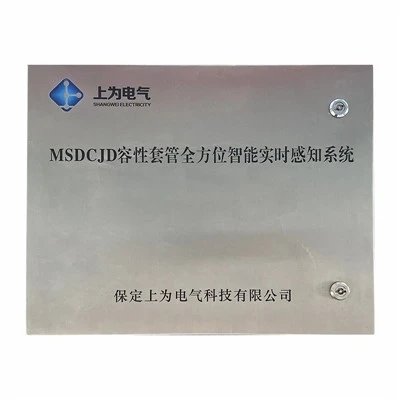
First, let’s get clear on the difference between online and offline monitoring. Online transformer monitoring is the real-time stuff—sensors permanently mounted on the transformer that track things like oil temperature, load current, partial discharge, and gas levels around the clock. It sends alerts when something is out of the ordinary, like a sudden spike in temperature or an unusual gas bubble in the insulating oil. That’s invaluable for catching issues as they happen, especially for high-voltage transformers in critical grids. But it’s not perfect. Online systems require continuous power, dedicated communication infrastructure, and regular calibration to stay accurate. For older transformers, or ones in remote locations where connecting permanent sensors is impractical, online monitoring might not be a feasible option. That’s where offline monitoring steps in.
At its core, offline transformer monitoring is a periodic inspection and testing process that happens when a transformer is taken out of service—even temporarily—for maintenance, routine checks, or repairs. Unlike online systems that are always connected, offline monitoring is a targeted, event-driven activity that focuses on deeper, more detailed analyses that you can’t get from real-time sensors. Let’s be honest: when a transformer is running, you can’t easily open up the tank, take a close look at the core, or pull a large oil sample for comprehensive testing. Offline monitoring lets you do exactly that.
Let’s walk through what an offline monitoring workflow typically looks like, from start to finish, because that’s where a lot of the value is. First, you coordinate with the site team to safely de-energize the transformer, ground the lines, and lock/tag it out—non-negotiable safety steps. Once it’s secure, the first thing we usually do is an external visual inspection. We check for things like rust on the tank, cracked bushings, loose connections, or signs of overheating on external components. That might sound basic, but you’d be surprised how many hidden issues start with a small external flaw that gets worse over time. Last year, we worked with a manufacturing plant that had a small crack in a bushing they’d missed in visual checks; during offline monitoring, we caught it before it turned into a full discharge that would have shut down their entire production line for three days.
Next, we move into electrical testing, which is the backbone of offline monitoring for many clients. One of the most common tests is the insulation resistance test, which measures how well the transformer’s windings are insulated from each other and from the core. Over time, insulation breaks down from heat, moisture, or aging, and a low insulation resistance number can be an early sign of trouble. We also do a power factor test (sometimes called dissipation factor) which gives more detail on the insulation’s condition—like if there’s moisture trapped in the paper insulation or if there’s surface contamination on the windings. Another key test is the turns ratio test, which checks that each winding has the correct number of turns. If turns are shorted or damaged, the transformer’s efficiency drops, and it can cause uneven loading that leads to overheating.
Then there’s the oil analysis, which is arguably the most informative part of offline monitoring. Transformer oil does two critical jobs: it insulates the windings and cools the core. As oil ages, it breaks down, absorbs moisture, and accumulates contaminants like dirt or metal particles. Offline oil testing goes way beyond the quick gas checks many online systems do. We run a full dissolved gas analysis (DGA) in a lab—wait, even though online systems do DGA, offline DGA is more precise because we can take a larger, cleaner sample from the bottom of the tank, where heavier gases and particles settle. DGA looks for specific gases like methane, ethylene, and acetylene, which are byproducts of different types of internal faults: acetylene, for example, is a sign of arcing, while methane might point to overheating. We also test for moisture content in the oil and the paper insulation (using a process called moisture equilibrium), acidity levels, and the presence of furans, which are chemicals that form when paper insulation breaks down. Last year, we had a utility client with a 20-year-old transformer that their online system flagged as “normal,” but when we did an offline oil analysis, we found high furan levels and a spike in ethylene, indicating slow overheating in the core. We recommended planned maintenance during a scheduled outage, and when they opened the tank, they found a corroded core that was generating excess heat. If we’d waited for the online alert, that failure would have happened during peak summer demand, costing them an estimated $2 million in lost revenue.
Another often-overlooked part of offline monitoring is physical inspection of the internal components. When a transformer is offline, you can actually open the tank, inspect the windings, core, and tap changers for damage. We use tools like borescopes to look into hard-to-reach areas without fully disassembling the transformer, which saves time and money. We check for loose winding connections, burnt spots on the core, or debris that might have accumulated from years of operation. Taps changers, which adjust the transformer’s voltage to match grid load, are a common failure point—offline monitoring lets us test their mechanical operation, clean the contacts, and check for wear that could cause a failure during peak loads.
So why is offline monitoring still relevant in an era of smart grids and IoT? Let’s be clear: online and offline monitoring aren’t competitors—they’re complementary. Online systems give you real-time visibility into ongoing operation, but they can’t replace the detailed, deep-dive analysis you get during an offline inspection. For example, online partial discharge sensors can alert you to partial discharge activity, but an offline insulation resistance test will tell you exactly how severe that discharge is and whether it’s affecting the long-term health of the windings. For older transformers that don’t have online sensors, offline monitoring is the only way to get that level of insight. It’s also more cost-effective for many utilities and industrial facilities—installing permanent online sensors on a single large transformer can cost tens of thousands of dollars, while a comprehensive offline monitoring program for an entire transformer fleet is a fraction of that cost, especially when spread out over scheduled maintenance outages.
But there are common mistakes we see clients make with offline monitoring. One of the biggest is only doing it when a transformer is already showing signs of trouble. That’s like waiting for a car’s check engine light to come on before changing the oil—you’re playing catch-up, and the damage is already done. The best practice is to implement a scheduled offline monitoring program, aligned with each transformer’s age, criticality, and operating environment. A transformer in a coastal facility with high salt content in the air will need more frequent offline checks than one in a dry, rural area. Critical transformers that power hospitals or data centers need inspections every 2 to 3 years, while lower-risk transformers can go 5 to 7 years.
Another mistake is not combining offline data with existing operational data. When we work with clients, we don’t just run tests and send a report—we compare the offline results with the transformer’s load history, online data (if they have it), and past maintenance records. For example, if a transformer’s offline insulation resistance is slightly low, but its load has been consistently high during summer months, that’s a different scenario than if the low resistance is paired with a history of moisture contamination. That context is what turns test numbers into actionable insights. We once had a client who dismissed a slightly low moisture reading because they thought their online system already checked for that, but when we combined the offline data with their 5-year load history, we realized the moisture was accumulating during winter months when the transformer was lightly loaded, and we recommended adding a small dehumidifier during those months to prevent future issues.
As someone who’s spent years helping clients design and implement offline transformer monitoring programs, I’ve seen firsthand how it prevents catastrophic failures and extends the life of transformers. The average lifespan of a power transformer is 30 to 40 years, but a good monitoring program—both online and offline—can push that to 50 years or more, saving hundreds of thousands of dollars in replacement costs. For industrial facilities, where downtime can shut down production lines worth hundreds of thousands of dollars an hour, offline monitoring isn’t just a maintenance task—it’s a business strategy.
If you’re still relying only on online monitoring, or if you’re skipping formal testing and just doing visual checks during outages, you’re leaving a lot of value on the table. Offline monitoring gives you the deep, detailed insights you need to catch issues early, plan maintenance downtime, and avoid costly unplanned failures. It’s not a replacement for online monitoring, but it’s an essential part of a holistic transformer health management strategy.

At the end of the day, transformers are the backbone of our electrical infrastructure, and keeping them running reliably isn’t a one-and-done task—it’s an ongoing process that combines real-time oversight and periodic, deep inspections. If you’re ready to build or strengthen your transformer monitoring strategy, or if you have questions about which approach is right for your fleet, we’re here to help. Our team has worked with utilities, manufacturing plants, and industrial facilities of all sizes to design custom offline monitoring programs that fit their needs and budget. Contact us to discuss your requirements and how we can help you avoid the costly, disruptive failure of a critical transformer.
Neutral Grounding Equipment References
- IEEE Std C57.104-2019, IEEE Guide for the Interpretation of Gases Generated in Oil-Immersed Transformers
- NERC (North American Electric Reliability Corporation), Transformer Maintenance Best Practices, 2021
- International Council on Large Electric Systems (CIGRE), Transformer Lifetime Management, Technical Brochure 762, 2019
- American Bureau of Shipping (ABS), Offshore Transformer Monitoring Guidelines, 2022
Baoding Shangwei Electric Technology Co., Ltd.
We are one of the most professional transformer monitoring manufacturers and suppliers in China, also support customized service. We warmly welcome you to buy durable transformer monitoring at competitive price from our factory. If you have any enquiry about quotation, please feel free to email us.
Address: Building 6, Baoding Zhongguancun Digital Economy Industrial Park, No. 777 Lixing Street, Baoding City, Hebei Province, China
E-mail: wendylu@swspower.com
WebSite: https://www.swspower.com/
