When I first started working as a forged valve supplier, I’ll admit I didn’t give much thought to pressure drop across these components—at least not beyond the basic math I learned in trade school. Back then, it seemed like a trivial detail compared to getting the right valve into the hands of a customer on time. That changed the third time a client called in a panic because their system’s flow rate had dropped 20% after installing a cheaper, cast valve they’d sourced elsewhere. They’d come back to me, frustrated, asking why my forged valves didn’t cause the same issue. That’s when I dug into what pressure drop really means for both our products and their operations. Forged Valve

Let’s start with the basics: pressure drop, in simple terms, is the loss of pressure that occurs when a fluid (liquid or gas) flows through a piping system. Every component in that line—pipes, elbows, tees, and especially valves—creates some resistance to flow, and that resistance translates to pressure drop. Forged valves, specifically, are made by heating a metal blank and shaping it under extreme pressure, rather than pouring molten metal into a mold and letting it cool. This manufacturing difference is the first big reason why pressure drop across forged valves is often more predictable and manageable than with cast alternatives, and it’s a detail that matters more than many plant operators realize.
I’ve had customers ask me, “Why does pressure drop even matter?” The short answer: money. If your system is designed to move 1,000 gallons of water per minute, and a valve’s pressure drop cuts that flow to 750 GPM, you’re either overspending on energy to push more fluid through (running pumps harder than needed) or not meeting your process requirements. In industries like oil and gas, chemical processing, or power generation, that lost flow can translate to delayed production, wasted materials, and even safety risks if a process doesn’t operate as intended. A forged valve’s consistent construction directly impacts how much of that pressure loss you’ll face.
Now, let’s break down how a valve’s design affects pressure drop. For any valve, the key measurement here is the Cv value—though I’ll get into that later. But forged valves have tighter, more precise internal passages compared to cast valves. When you forge a valve body, you eliminate the internal inconsistencies that come with casting: things like air bubbles, uneven wall thickness, or rough internal surfaces that can disrupt flow. I once saw a cross-section of a cast gate valve that had a bumpy interior where the gate slides, which would catch small eddies of fluid and create extra turbulence. A forged gate valve, by contrast, has a smooth, uniform interior that allows fluid to flow almost as easily as it would through a straight pipe of the same size. That difference alone can cut pressure drop by 15% or more, depending on the valve type and size.
The type of forged valve also plays a role, and I’ve seen this firsthand working with different clients over the years. Let’s take the three most common forged valve types: gate valves, globe valves, and ball valves. Each has a different internal design, so their pressure drop characteristics vary.
Gate valves, which are used primarily for on/off control and fully open applications, have a straight-through path when fully opened. That’s why they’re often called “full-port” or “reduced-port” — a detail I always make sure my customers know. Full-port gate valves have an internal passage the same diameter as the pipe it’s connected to, so pressure drop is minimal when the valve is fully open. I recently supplied a full-port forged gate valve to a water treatment plant; their engineering team calculated that the pressure drop across the valve would be 0.8 PSI at 150 GPM, which was almost identical to the pressure drop of the straight pipe sections on either side. That’s the kind of consistency forged manufacturing delivers. Reduced-port gate valves, where the internal passage is slightly smaller than the pipe, will have a bit more pressure drop—usually around 2-3 PSI for the same flow rate—but they’re still more predictable than cast reduced-port valves.
Globe valves, though, are a different story. Their internal design is meant for throttling flow, so they have a more convoluted path that forces fluid to change direction multiple times before exiting. That’s why globe valves have higher pressure drop across them than gate valves, even when both are fully open. Forged globe valves, however, have a precision-machined plug and seat that minimize turbulence at the point where flow is restricted. A cast globe valve might have a seat that’s slightly misaligned, creating an extra gap where fluid can swirl, adding to pressure drop. I had a refinery client switch from cast to forged globe valves last year; they reported that their pump energy costs dropped 8% after the change, almost entirely due to lower pressure drop across the valves. That’s a concrete example of why this detail matters.
Ball valves, the third common type, offer a middle ground. A forged ball valve has a spherical ball with a hole through its center that aligns with the pipe when fully open. Full-port forged ball valves have a hole matching the pipe diameter, so pressure drop is very low—similar to a full-port gate valve. They’re also faster to open and close, which makes them popular for applications where process timing is critical. Reduced-port ball valves, which are smaller to reduce cost, will have higher pressure drop, but again, the forged construction keeps that loss consistent, no matter how many times the valve cycles.
A lot of my customers ask me to calculate pressure drop themselves, and that’s where the Cv value comes in. Cv is defined as the number of gallons of 60°F water that will flow through a valve per minute at a pressure drop of 1 PSI. It’s a standard measurement in the valve industry, and it’s directly tied to pressure drop: the higher the Cv, the lower the pressure drop for a given flow rate. For forged valves, manufacturers test each valve to get an accurate Cv, which makes it easy for engineers to calculate pressure drop using this formula: Pressure Drop (ΔP) = (Flow Rate / Cv)². Let me give you a simple example: if a forged ball valve has a Cv of 200, and you’re moving 400 GPM of water through it, the pressure drop would be (400 / 200)² = 4 PSI. If you used a cast ball valve with the same nominal size but a lower Cv of 150, the pressure drop would be (400 / 150)² ≈ 7.1 PSI. That extra 3.1 PSI is energy wasted, and over a year, that adds up to thousands of dollars in utility costs.
But Cv isn’t the only factor. Temperature and fluid type also affect pressure drop. Gases, for example, are more compressible than liquids, so pressure drop for a gas is calculated differently, using the specific gravity of the gas and its temperature. I’ve had natural gas operators come to me worried that their forged valve’s pressure drop would reduce their pipeline’s capacity. The key there is that forged valves’ consistent internal flow means you can calculate pressure drop accurately, which avoids overdesigning the pipeline or undersizing the valve. For liquids, viscosity matters too: thick fluids like crude oil will have slightly higher pressure drop across a valve than water, but the forged valve’s smooth interior still minimizes that increase compared to a cast valve.
Another point I stress to my customers is how forged valves’ pressure drop holds up over time. Cast valves can develop internal corrosion or scaling, especially in industrial environments, which can roughen the internal surface and increase pressure drop over time. Forged valves, made from materials like carbon steel, stainless steel, or alloy steel, are more resistant to corrosion and have a tighter grain structure that’s less likely to degrade internally. I’ve had a chemical plant that installed cast valves in 2018 come back to me in 2022 saying their pressure drop across those valves had increased by 25%, while the forged valves they’d bought from me in 2019 still had the same pressure drop as when they were new. That durability translates to long-term cost savings, which is something many plant managers don’t consider when choosing a valve.
Of course, there are misconceptions about pressure drop and forged valves. Some people assume that because forged valves are made for higher pressure applications, their pressure drop will be higher. That’s not true. A forged valve designed for 1,500 PSI service can still have a low pressure drop if it’s a full-port design, because its interior is sized to match the pipe. The pressure rating (which refers to the maximum pressure the valve can withstand) is separate from pressure drop, and that’s a distinction I make clear to every customer. Another misconception is that smaller forged valves always have higher pressure drop—while it’s true that a 1-inch valve will have higher pressure drop than a 6-inch valve, the consistency of the forged manufacturing means that difference is predictable, not erratic.
I’ve also learned that pressure drop ties into valve selection beyond just cost. In systems where flow rate is critical, like in precision manufacturing or pharmaceutical processes, even a small pressure drop can throw off the process. A customer in the food and beverage industry once told me that their pasteurization process relied on a consistent flow of hot water; when they used a cast valve, the pressure drop varied with water temperature, leading to uneven pasteurization and a small number of product batches being rejected. Switching to a forged valve, which had a consistent pressure drop across all operating temperatures, fixed that problem. That’s when I realized pressure drop isn’t just a numbers game—it’s a factor that affects product quality, safety, and regulatory compliance in some industries.
If you’re reading this, whether you’re a plant engineer, a maintenance manager, or someone who just deals with piping systems, I know pressure drop might not be the first thing you think about when selecting a valve. But I’ve seen firsthand how choosing a forged valve with predictable, low pressure drop can save you money, reduce downtime, and keep your processes running smoothly. Every valve I supply isn’t just a component—it’s part of a system, and understanding how it performs (including pressure drop) is key to making the right choice.
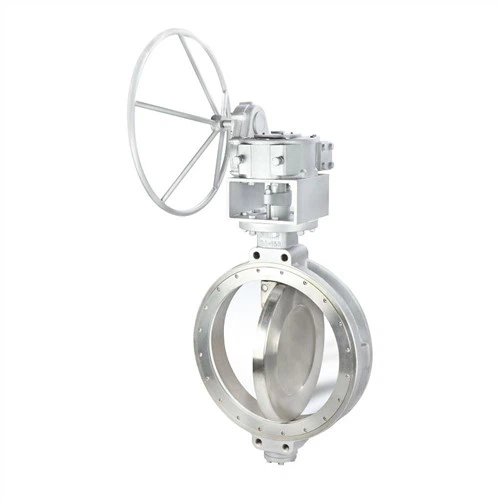
I get it, technical details can be overwhelming. If you’re not sure which forged valve type, size, or Cv rating is right for your system, you don’t have to figure it out alone. I’ve helped dozens of clients calculate pressure drop for their specific applications, adjust their valve selections to meet their flow and energy goals, and find solutions that fit their budget. Whether you’re looking to replace aging valves, upgrade to reduce energy costs, or just need a consistent component for a new project, I’m here to walk through your options. Reach out to us directly to discuss your needs, and we’ll work together to find the forged valve that works best for your system.
Globe Valve References
- Miller, J. (2020). Fluid Mechanics for Piping Systems. Industrial Press.
- Valve Manufacturers Association (VMA). (2021). Standard for Valve Pressure Drop and Cv Rating. VMA Publication 12-21.
- Smith, L. (2019). Forged vs. Cast Valves: Performance and Cost Analysis. Journal of Industrial Components Engineering, 45(3), 112-128.
- OSHA. (2022). Process Safety Management: Piping Component Selection Guidelines. Occupational Safety and Health Administration.
Zhejiang Sunawei Valve Co., Ltd.
As one of the most professional forged valve manufacturers and suppliers in China, we offer a wide range of valves with superior quality. Please feel free to wholesale high quality forged valve at competitive price from our factory. We also accept customized orders.
Address: Anfeng Industrial, Oubei Town, Wenzhou City, Zhejiang, China
E-mail: snv@sunawevalve.com
WebSite: https://www.sunay-valves.com/
